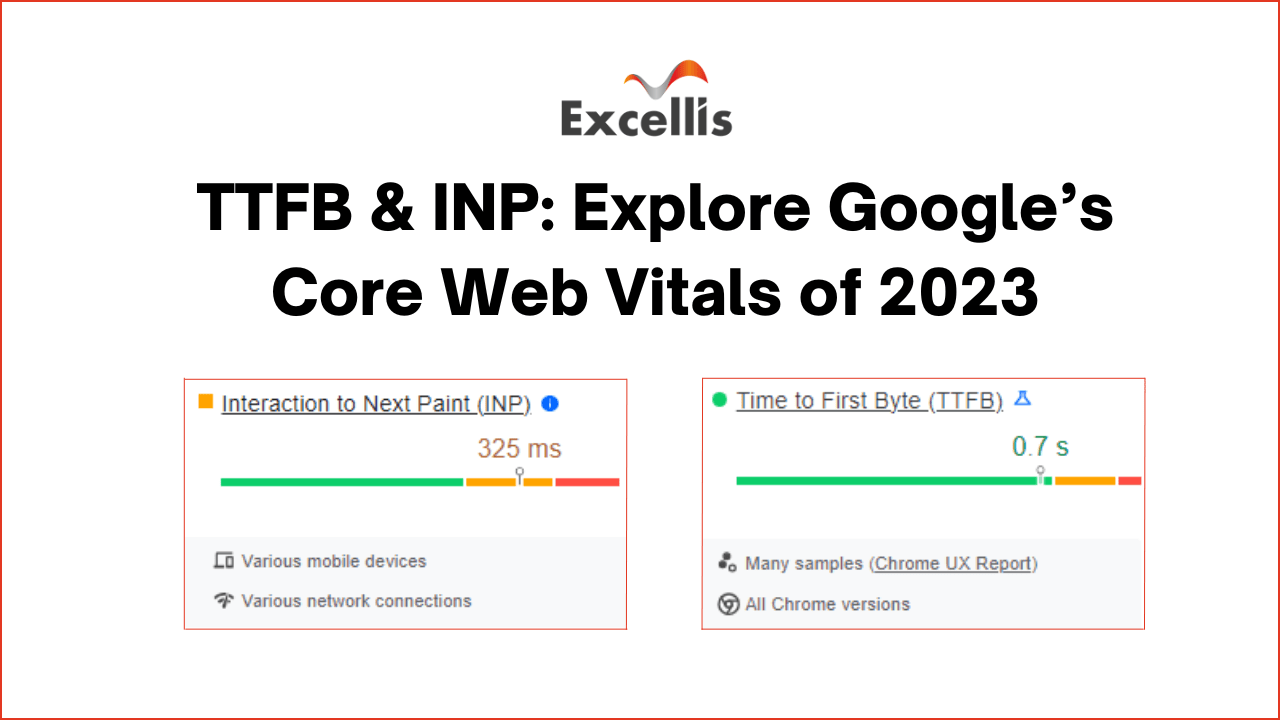
In today’s digital landscape, website performance plays a crucial role in attracting and retaining users. While Google’s performance metrics are ever-changing, it has introduced its latest core web vitals– TTFB and INP.
In this article, we will delve into the definition, importance, measurement, and optimization of TTFB and INP.
So, let’s jump into it!
Key Takeaway
In a nutshell, TTFB (Time to First Byte) and INP (Input Delay) are vital metrics for website performance. TTFB measures server response time, while INP focuses on user interaction delays. Optimizing both ensures faster loading, improved user experience, and higher search engine rankings.
Definition of TTFB (Time To First Byte)
TTFB, or Time to First Byte, is the duration between a user’s request for a webpage and the moment the first byte of data is received from the server. It includes the time taken for the server to process the request, generate the webpage, and send it back to the user’s browser. TTFB is measured in milliseconds (ms) and is a critical factor in determining the initial load time of a webpage.
Importance of TTFB
TTFB plays a crucial role in user experience and search engine optimization. A fast TTFB contributes to a snappy and responsive website, resulting in a positive user experience. Users expect websites to load quickly, and a delay in TTFB can lead to frustration and increased bounce rates. Moreover, search engines consider TTFB as one of the factors when ranking web pages. A slow TTFB can negatively impact a website’s search engine visibility and organic traffic.
What is Considered a Good TTFB
A good TTFB is typically below 200 milliseconds. However, it’s important to note that the acceptable TTFB may vary depending on the complexity of the website, the user’s geographical location, and the available network infrastructure. It’s recommended to aim for the lowest TTFB possible to ensure optimal performance.
How to Measure TTFB
Measuring TTFB requires specialized tools and techniques. One common method is to use web performance monitoring tools that provide detailed metrics, including TTFB. These tools simulate user requests and measure the time it takes for the server to respond with the first byte. By monitoring TTFB regularly, website owners and administrators can identify performance bottlenecks and take necessary optimization measures.
How to Lower TTFB
Reducing TTFB involves various optimization strategies. Here are some effective techniques:
-
Optimize server configuration
Fine-tune server settings, such as caching, compression, and resource allocation, to improve response times.
-
Use a content delivery network (CDN)
CDNs cache website content in multiple server locations worldwide, reducing the physical distance between users and servers, thereby improving TTFB.
-
Enable caching
Implement browser and server-side caching to store frequently accessed content, reducing the need for generating webpages from scratch.
-
Optimize database queries
Ensure efficient database queries by using indexes, optimizing table structures, and minimizing unnecessary database operations.
-
Minimize network round trips
Reduce the number of HTTP requests by combining and compressing CSS and JavaScript files.
Not an expert? Connect to the best digital marketing company in Kolkata.
Definition of INP
Apart from TTFB, Input Delay (INP) is another crucial metric that affects user experience. INP is a pending Core Web Vital that will replace FID in March 2024. INP refers to the time between a user input, such as clicking a button or selecting an option, and the response or feedback received from the website. It includes the time taken for the browser to process the user’s input and render the corresponding changes on the webpage.
Benefits of INP
A low INP contributes to a seamless and interactive user experience. When users interact with a website, they expect immediate feedback. A high INP can result in delays, unresponsive UI elements, and overall frustration. Optimizing INP leads to improved user satisfaction, increased engagement, and higher conversion rates.
What is Considered a Good INP
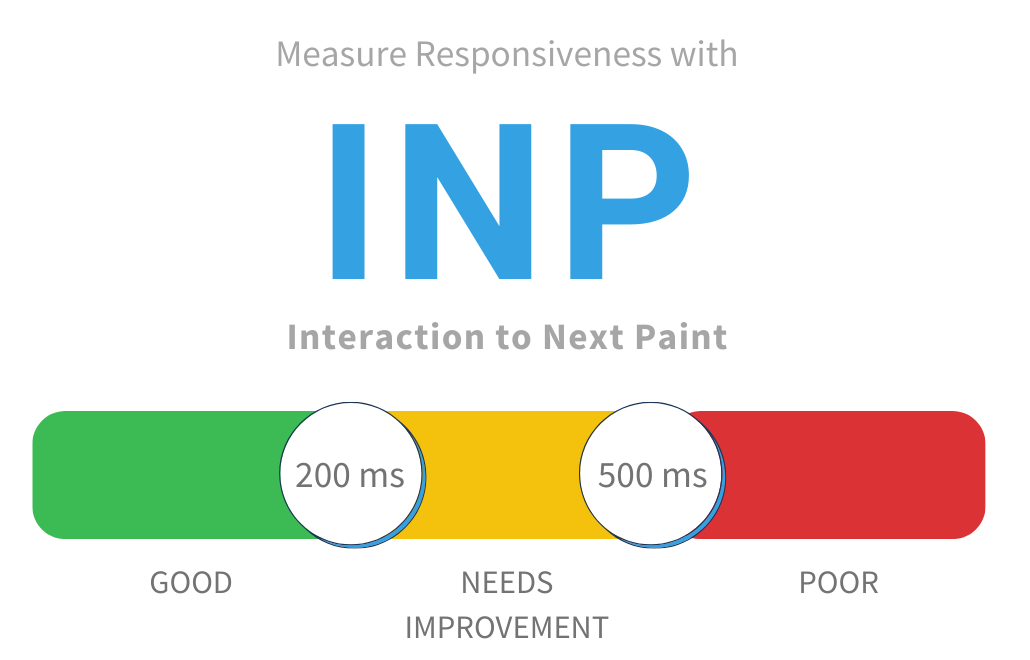
An ideal INP should be under 200 milliseconds to provide a smooth and responsive user experience. However, similar to TTFB, the acceptable INP may vary depending on factors such as website complexity and the nature of user interactions. Striving for a low INP is essential for delivering a highly interactive website.
How to Measure INP
Measuring INP requires tools that capture user interactions and the corresponding response times. Performance monitoring tools equipped with user session recording capabilities can track input events and measure the time it takes for the website to respond. Analyzing INP data helps identify areas where improvements can be made to reduce delays and enhance interactivity.
How to Optimize INP
To optimize INP, consider the following strategies:
-
Prioritize critical rendering
Ensure that the most important content and interactive elements are rendered and respond quickly to user inputs.
-
Minimize JavaScript execution time
Optimize JavaScript code by reducing its complexity, removing unnecessary libraries, and leveraging asynchronous loading techniques.
-
Optimize event handlers
Review event handling code to ensure it is efficient and doesn’t introduce unnecessary delays in responding to user inputs.
-
Optimize CSS rendering
Minimize render-blocking CSS and use techniques like lazy loading and critical CSS to speed up the rendering process.
-
Leverage browser capabilities
Utilize modern browser features and APIs to enhance interactivity and responsiveness, such as prefetching resources and utilizing service workers.
Conclusion
In conclusion, TTFB and INP are critical performance metrics that significantly impact user experience and website success. A fast TTFB ensures quick webpage loading, while a low INP provides seamless interactivity. By understanding these metrics, measuring them accurately, and implementing optimization strategies, website owners and administrators can deliver exceptional user experiences, improve search engine rankings, and drive higher user engagement and conversions.