Why Does Every Company Need an SEO Strategy?

When you need to find anything, do you ever go to the third page of Google? You will never look that far. Most people do which is why SEO is so important. Briefly, SEO refers to the process of enhancing your website’s visibility.

Being on the first page of search results implies having an advantage over your competition for most businesses. People conduct about 40,000 searches each second on average, amounting to approximately 3.5 billion daily searches and 1.2 trillion per year. Google is the most popular website on the internet. But think about it: how often do you use Bing or Yahoo to conduct your search?

Google has been the go-to resource for researching and purchasing products and services since its inception in 1997. The search, however, comes to a halt on page one. According to 90% of respondents in the Searchengineland survey, this is true.

If your audience cannot find you on the first page of search results, you will lose sales. It is that easy.

But, if you are still not convinced, consider the following reasons to begin working on and know how SEO works for business:


Increase Organic Traffic

The primary goal of any online business or eCommerce is to get people to visit your site. The more individuals who view your page, the more probable it is that new clients will buy your goods and services. Because SEO accounts for 53% of all website traffic, it is your most successful approach for getting customers. Thus, it is very important that you implement SEO correctly.

You will get more traffic if your website ranks for relevant keywords. To get to the first page of Google, you will need SEO. Consider the fact that the first Google search results have a click-through rate of 28.5 percent. The rate reduces to 2.5 percent if you get the tenth result right. SEO Company in Kolkata can help you with this.


User also read: What Are the Link Building Strategies Trending in 2022?


It is cost-effective

SEO offers a good return on investment when compared to the costs of other forms of online marketing, such as PPC advertising, social media marketing, or buying leads for an email marketing campaign. While PPC may generate more cash and social media may be more crucial for your brand’s image, organic SEO remains the foundation of your online presence in many respects.


Brand Authority

SEO benefits both organic traffic and brand authority. People are more likely to trust websites that appear on the first Google page, and just a small percentage of searches seek for links on the second page – less than 1% of searchers do so.

People rely on the first page of results to answer their questions and to make a buy. Unless you are a well-known company like Amazon or eBay, you will have to work hard to get a spot in the top few results. New consumers are more likely to find you by searching for certain keywords rather than your company name. People will trust your brand and make purchases on your site if they see your page at the top of their searches, delivering useful information. Hiring a Digital Marketing Company in Kolkata will help you with your brand authority.


Search engines grabbing more market share

Customers now consult internet reviews before making purchases in the range of 80-90 percent, and this number is projected to rise. It will not be long before everyone uses the internet to seek for products and services. Do you want them to be able to find your company, or do you not want them to be able to find it? People will have a tough time discovering you if you do not have organic SEO in place, and instead will go to your competitors’ websites.


Target Audience

As previously said, potential clients are likely to find you when conducting a Google search. Using SEO to target specific keywords allows you to narrow down your audience and attract real prospects. You, for example, have a sustainable clothing eCommerce store. You can attract a niche audience by using keywords relevant to a zero-waste lifestyle. They will return to your page for additional information.

Creating brand recognition also requires identifying potential clients and creating a following of people who will come to your page for certain products and services. And they will return to your page for more information and to buy the things they require. You may properly target your buyer persona and develop your business over time with the right SEO approach.


User also read: Top 6 HTML Tags You Need to Know for SEO


Rise of mobile bandwidth and local search optimization

The volume of traffic sent to mobile devices is likely to surpass that sent to regular desktop PCs later this year. Companies have access to a whole new universe of efficient SEO tactics, such as local search optimization, because of the tremendous increase in mobile usage.


User Experience

Your website must have optimized content to facilitate user navigation for SEO methods to be effective. Improving your user experience will encourage people to stay on your website longer. SEO bots will consider your page as relevant if users stay on it for an extended period, which will boost your ranking. What is more, it will boost your sales.

Indeed, 70% of marketers believe that SEO is more effective at driving sales than paid advertising. Branding your business is a part of content optimization. People may connect with your website design, resulting in more qualified leads who are more likely to become paying clients.


Not having a healthy content profile is damaging

With each new modification to their algorithm, Google and other search engines alter their approach to webpages. Things that did not exist a few years ago, like social media indicators, are now given a lot of weight in terms of how they affect your results. Not developing a strong content profile over months and years can be detrimental to your business, as it is one of the elements Google considers when evaluating your website. Hiring Best Content Marketing Service provider will help you with healthy content.


Offline Sales

Another benefit of SEO is that it aids offline sales. People frequently examine store websites before physically coming in to purchase an item, which should come as no surprise. They also use Google to compare pricing, locate local shops, look up inventory, and, most crucially, read reviews. These internet search queries, which used to be conducted in stores, have climbed by 15% in the last several years. As a result, a well-executed SEO strategy benefits both online and physical sales.


Understanding Your Audience

Finding the perfect key to express your goal and offerings to your audience entails understanding your audience. By focusing on the proper keywords, SEO helps you understand your audience. It is also one of the most useful tools for analyzing market trends and shifting to follow the behaviors of your audience. Data and formats from SEO provide a detailed picture of user behavior and purchasing habits. You can easily market your products and services based on your audience’s preferences with the help of search query data, SERP analysis, analytics data, and AI knowledge.


In Short,

Investing in organic SEO services in Kolkata are more vital now than it has ever been, despite the current challenge that everyone is experiencing due to a lack of organic keyword data and traffic. If you want to thrive in online marketing, your company must have an SEO strategy in place; it is still one of the most crucial aspects of any company’s branding and online presence.
 

Top 6 HTML Tags You Need to Know for SEO

The visibility of a page on Search Engine Results Pages can be made or broken by HTML tags (SERPs). As a result, each tag must be meticulously written.

It is pointless to publish online material that receives no traffic, visibility, or ranking in the SERPs. It is not enough to simply write high-quality content; it is also necessary to make it search engine visible. Every website’s principal goal is to attract visitors. As a result, using search engine rankings to engage your audience is crucial. Using HTML Tags for SEO is the best approach to accomplish this. This crucial work might be assisted by an SEO agency or a Digital Marketing Agency.

A webpage’s visibility in the SERPs can be improved by optimizing its HTML tags. One factor may be favored over the others when optimizing. However, we must keep in mind that optimizing and focusing on a single HTML tag will not be beneficial. The best technique to improve the visibility of a webpage is to use a thorough and integrated SEO strategy. Take the help of organic SEO services in Kolkata to get this done.


Title Tag

The title tag is responsible for every result displayed in a search engine, whether it is Bing or Google, making it one of the most crucial HTML tags for SEO. The title tag should correspond to the title of the article. Furthermore, it is recommended that it be kept under 70 characters long, or else it will be cut short in SERPs. Avoid putting a million keywords into your titles and place them closer to the beginning.

Using the title “5 methods to do laundry” and then modifying the title tag to “title>5 Reasons to not do laundry/title>” for example, would cause confusion. Someone looking for ways to do laundry would undoubtedly ignore anything presented in this manner.


Meta Description Tag

The Meta Description Tag is included in the head of a page and allows you to specify how your content should be described in the SERPs. It shows a portion of your website’s content to your visitors. A well-written, clear, and comprehensive Meta Description Tag can entice visitors to your website, resulting in more clicks. The Meta Description Tag is a crucial SEO tag and one of the oldest HTML parts.

Meta name=” description” content=”HTML tags can make or break a page’s presence in SERPs. As a result, each tag must be meticulously written. The ten most crucial HTML tags are shown below.”/>


The Header Tags

Header tags are used to divide content in an article so that it is easier to read. About 55% of visitors will skim your material in under 15 seconds. All header tags are shown below:

<h1>/h1> – web page titles

<h2>/h2> — the title’s subject.

<h3>/h3> – reflects points

<h4>/h4> – subheadings <h3>

<h5>/h5> – not commonly used, but useful for supporting h4> points.

Header tags are also used by search engines to identify content portions and produce featured rich snippets. As a result, these HTML tags are also critical for SEO.


User also read: Create the Perfect Robots.txt File for SEO


Image Tags

Using images in your essay can improve readership by 94 percent, according to research. The Image Tag aids search engines in discovering the photos in your post. Some pages, such as an e-commerce website, need the use of graphics. Visitors’ interactions with the e-commerce web page are influenced by graphics. To help search engines display a page for appropriate queries, it is critical to help them comprehend the significance of the images and how they are connected to the rest of the material. JPEG, PNG, and GIF pictures are shown with the Image Tag. It is distinguished by three features. –

The image’s src element specifies its URL.

If the image cannot be viewed for any reason, the alt attribute describes the alternate text.

The content of the image is described by the title attribute.

The following is how an Image Tag is built:

<img> tag: <img src” girl123.jpg” alt=” A girl dancing in the rain” title=” Dancing Girl”>


Open Graph Tags

Open graph tags help improve social media search and display. If your content is posted on Facebook, for example, the open graph will be used to display information. As a result, this HTML tag is crucial for both SEO and social networking.

For instance, if the meta name=”og:title” property=”og:title” content=”Article Title”>

If the content is shared on social media, Facebook will automatically grab the title from this tag.

Descriptions and photos are supported by Open Graph. It is useful when you want to target a specific group of users on search engines and another group on social media, because it lets you have one meta description for social media and another for search engines. Our affordable SEO services in Kolkata can help you with the same.


Robots Tags


The content=”noindex” attribute on a Robot Meta Tag on any web page tells search engines not to index the page. A no follow property tells the browser not to click any of the website’s links. When you have content that has no relevance on your website but is required to be on your site for some reason, Robot Meta Tags can help. You may also need to publish some “draughts” later. You do not want such pages to appear when your site’s quality is being assessed. Robot Meta Tags are quite useful since they allow you to have some control over what appears in the SERPs. The following is the format of a Robot Meta Tag:

content=”noindex,nofollow”>meta name=”robots”>


Canonical Tags


When you have several pages with similar content, the Canonical Tags are used. It instructs the search engine to prioritise one page above another. This HTML tag also tells search engines that these pages are not duplicates.

The structure of a Canonical Tag is as follows: <link href=”URL” rel=”canonical”>


In Short,

It is no longer enough to create great content; you also need to make it search engine friendly. The HTML tags for SEO can help you get visitors and rank higher in search engines. Due of the elevated level of competition on the internet, you must strategically use all the HTML tags for SEO to maximize your advantages. The best Digital Marketing Services in Kolkata can help you out with this.


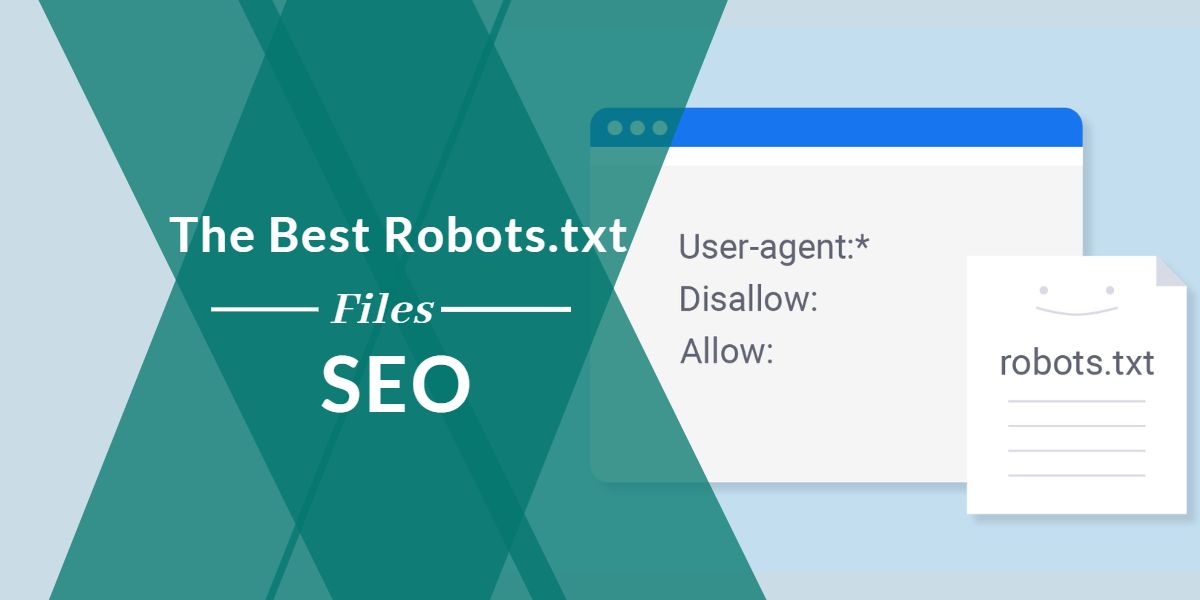
Create the Perfect Robots.txt File for SEO

What is the purpose of robots.txt, and why is it vital for SEO? Robots.txt is a file that tells web crawlers which portions of your website they can visit. Robot txt is supported by and used by most search engines, including Google, Bing, Yahoo, and Yandex, to determine which web pages to crawl, index, and display in search results.

Your robots.txt file can be the source of your website’s inability to be indexed by search engines. Robot.txt problems are among the most prevalent technical SEO issues in SEO audit reports and result in a significant decline in search ranks. Unfortunately, robot.txt matters can happen to even the most experienced organic SEO services providers and web developers.


This Article Gives a Detailed Robots.txt Introduction and Guide


What is a robots.txt file?

Robots.txt is a file that tells web robots (primarily search engine robots) how to crawl the pages of a website. The robots exclusion protocol (REP) defines how robots crawl the internet, access and index content, and serve it to people. The REP comprises page, subdirectory, and site-wide instructions on how search engines should read links in addition to meta robots directives (such as “follow” or “no follow”).

Robots.txt files specify whether specific user agents (web-crawling software) are allowed to crawl particular areas of a website. The behavior of select (or all) user agents is “disabled” or “enabled” in these crawl instructions.


Why is Robots.txt Important?

For many websites, tiny ones, having a robots.txt file is not necessary. This is since Google can usually identify and index all a site’s important pages. Also, they will not index duplicate content or uninteresting pages by default. However, there is no reason you should not have a robots.txt file, so I strongly advise you to do so. A robots.txt file allows you more control over what search engines can and cannot crawl on your site, which is beneficial for a variety of reasons:


Allows Non-Public Pages to be Blocked from Search Engines

You might not want certain pages on your site to be indexed. For example, suppose you are working on a new website in a staging environment and want to keep it concealed from users until it is ready to go live. Alternatively, you can have login pages on your website that you do not want to appear in SERPs. You can utilize robots.txt to keep search engine crawlers away from specific pages if this is the case.


Controls Search Engine Crawl Budget

If you have trouble getting all your pages indexed in search engines, you may have a crawl budget problem. Said, search engines are wasting time crawling your website’s dead weight pages, wasting time given to crawl your material. Search engine robots can spend more of their crawl money on the pages that matter the most by using robots.txt to blacklist low utility URLs.


Prevents Indexing of Resources

It would help if you used the “no-index” meta directive to prevent specific pages from being indexed. On the other hand, Meta directives do not work well with multimedia resources like PDFs and Word docs. Robots.txt comes in handy here. Search engines will be banned from viewing these multimedia files if you add a simple line of text to your robots.txt file.


Robots. txt Timeline

Martijn Koster, the developer of Allweb, devised the robot.txt file to control how search engine bots and web crawlers access web material. Here is a timeline of the development of the robots.txt file throughout time:

  • In 1994, Koster developed a web spider that targeted his servers and launched malicious attacks. Koster created the robot.txt file to direct search bots to the correct pages and prevent them from accessing portions of a website.
  • In 1997, an internet draught was published to outline the control techniques for web robots via a robot txt file. Since then, Robot.txt has been used to limit or channel a spider robot to specified website areas.
  • On July 1, 2019, Google said it is trying to formalize the robots exclusion protocol (REP) standards and make it a web standard, 25 years after the robots txt file was created and accepted by search engines.
  • The purpose was to provide undetermined circumstances for robots txt parsing and match to conform to modern web standards. Therefore, according to this internet proposal, any URI-based (URI) transfer protocol, such as HTTP, CoAP, and FTP, can utilize robots txt.
  • To avoid putting an extra burden on servers, web developers must parse at least the first 500 kibibytes of a robot.txt.
  • Robots.txt SEO content is often cached for up to 24 hours to provide site owners and developers with enough time to update their robots.txt files.

When a robots.txt file becomes unreachable due to server issues, disallowed pages are not crawled for a reasonable amount of time. Over time, several industrial efforts to broaden robot exclusion methods have been made. Unfortunately, all web crawlers may not support these new robot txt protocols. Let us start by defining a web crawler and answering a fundamental question: how do web crawlers work?


How (Exactly) Does a Robots.txt Work?


As I previously stated, a robots.txt file serves as a guidebook for search engine robots. It instructs search bots on where to crawl (and where not to). As a result, as soon as a search crawler reaches a page, it will hunt for a robots.txt file. If the crawler encounters a robots.txt file, it will read it before proceeding with the site’s crawl. If a robots.txt file is not found, or if the file does not contain directives that prevent search bots from crawling the site, the crawler will continue to scan the whole site as usual.


A robots.txt file is explicitly formatted for search bots to find and read. To begin with, it is a text file that does not contain any HTML markup code (hence the .txt extension).

Second, it is saved to the website’s root folder, such as https://www.excellisit.com/robots.txt.

Third, it follows a conventional robots.txt syntax, as follows:

This syntax may appear intimidating, but it is simple. Briefly, you describe the bot (user-agent) to whom the instructions apply before stating the rules (directives) that the bot should follow.


Technical robots.txt syntax

The grammar of robots.txt files can be considered their “language.” In a robots file, five terms are likely to appear. Here are a few examples:

The user agent specifies which web crawler you are instructing to crawl (usually a search engine). The most used user agents are listed below.

Allow: Tells a user agent not to crawl a URL. Each URL is limited to just one “Disallow:” line.

Allow (Only for Googlebot): Tells Googlebot that it can visit a page or subfolder even if its parent page or subfolder is blocked.

Crawl delay is the amount of time a crawler should wait before loading and crawling the content of a page. This instruction is ignored by Googlebot, although the crawl space can be adjusted in Google Search Console.

Sitemap: Indicates where any XML sitemap(s) linked to this URL can be found. Google, Ask, Bing, and Yahoo are the only engines that support this command.


What Is Robots.txt Used For?

To manage spider crawl traffic to your website, utilize the Robot.txt syntax. It is essential for search engines and online users to find your website. Do you want to learn how to use robots.txt and make your own? The following are the best strategies to use robots.txt for WordPress and other CMS to optimize your SEO performance:

  • Don’t let Google’s web crawler and search bot requests overwhelm your website.
  • Use robots txt no follow directives to keep Google crawl robots and search spiders out of private portions of your website.
  • Keep harmful bots out of your website.
  • Increase your crawl budget, which is the number of pages on your website that web crawlers can crawl and index in a particular amount of time.
  • Improve the crawlability and indexability of your website.
  • In search results, avoid duplicate content.
  • Hide unfinished pages from Google’s web crawl robots and search spiders until they are ready to go live.
  • Make the user experience better.
  • Distribute link equity (also known as link juice).

Crawlability and indexability can be badly impacted by wasting crawl budget and resources on pages with low-value URLs. Therefore, do not stop learning how to generate robots txt for SEO until your site has multiple technical SEO concerns and significantly reduced ranks. Protect your website from harmful bots and internet threats by mastering robots.txt Google SEO.


Robots.txt vs. meta robots vs. x-robots

There are so many of them! What is the difference between these three distinct kinds of robot commands? First, a text file is robots.txt, whereas meta and x-robots are meta directives. Aside from what they are, the three have distinct roles to play. For example, meta and x-robots can control indexation behavior at the individual page (or page element) level, whereas Robots.txt controls crawl activity throughout the entire site or directory.


How to Audit Your Robots.txt File for Errors

I have seen more problems in robots.txt files than any other part of technical SEO in my time. Issues can and do arise when there are so many contradictory directives.

It pays to keep an eye out for problems with robots.txt files. Fortunately, you can monitor robots.txt issues using Google Search Console’s “Coverage” report. You can also use Google’s Robots.txt Testing Tool to look for issues in your live robots file or to test a new robots.txt file before deploying it.


Submitted URL blocked by robots.txt

This error indicates that robots.txt has blacklisted at least one URL in your sitemap(s). Only the URLs you want to be indexed in search engines should be included in a properly built-up sitemap. As a result, no non-indexed, canonicalized, or redirected sites should be found there.

If you have followed these recommended practices, no pages in your sitemap should be banned by robots.txt. If “Submitted URL forbidden by robots.txt” appears in the coverage report, investigate which pages are affected and modify your robots.txt file to remove the restriction. To determine which directive is blocking the material, use Google’s robots.txt tester.


Blocked by Robots.txt

This “error” indicates that your robots.txt has blacklisted pages that Google does not yet index. Remove the crawl block from robots.txt if this material is valuable and should be indexed. Caution: “Blocked by robots.txt” does not always mean something is wrong. However, that may be precisely what you are looking for.

You may, for example, have used robots.txt to prohibit specific files from being indexed by Google. If you have prevented crawling particular pages to no-index them, try removing the crawl block and replacing it with a robot’s meta tag. The only method to ensure that Google does not index content is to do so.


Indexed, Though Blocked by Robots.txt

This error indicates that Google still indexes some of the content that robots.txt has prohibited. It occurs when Googlebot can still find the content due to links from other websites. Then, Googlebot crawls and indexes that content before going to your website’s robots.txt file and seeing the forbidden directive.


It is too late by that point. It is also indexable:

Robots.txt is not the way to go if you want to keep content off Google’s search results.

I suggest removing the crawl block and replacing it with a meta robots no-index tag to avoid indexing.

On the other hand, if you accidentally blocked this content and want it to stay in Google’s index, remove the crawl block in robots.txt and leave it alone.

This could help the content appear more prominently in Google searches. Any good Search Engine Optimization Company in India can help you.


In Short,

Robots.txt can help improve the crawling and indexing of your website’s content, allowing you to appear higher on search engine results pages.

It is the most significant text on your website when used correctly. However, if used irresponsibly, it might become your website’s Achilles heel.

The good news is that better search results are within your grasp with just a little understanding of user agents and a few directives. However, if you are confused, get help from a Digital Marketing Company in Kolkata.


App Store Optimization (ASO) Guide For 2022

The competition for all verticals is challenging; therefore, launching an app is no joke. According to the International Business Times, the App Store receives around 1,000 app submissions every day. When planning your overall app store optimization guide, it is crucial to research your competition. The most popular technique for discovering new apps is searching the app store. According to App Radar, seventy per cent of mobile consumers use search to find new apps. Furthermore, 65% of all downloads take place immediately following an investigation.


What is App Store Optimization (And Why Is It Important)?

App Store Optimization (ASO) is the process of optimizing, refining, and altering your app’s listing to increase exposure in your preferred app store, such as Apple’s iOS App Store or Google’s Play Store for Android. The better your app’s listing is, the more likely it will appear in app store search results for relevant terms, allowing new potential customers to discover it.

In fact, according to Google, the Play Store is where 48% of their consumers discover new mobile apps. That suggests that a significant share of their annual downloads of 108.5 billion come from this source!

App store optimization strategies 2022 should be part of your marketing plan if you want your apps to have high search rankings and be readily found by your target audience.


Deep understanding of how App Store Optimization works

Apple app store optimization is based on a straightforward premise. The higher your app’s ranking, the more prospective inexperienced users will learn about it. Applying these insights while creating ASO content is critical to understanding your users. The primary goal of content optimization is to enhance organic downloads and listing visits. Said, app store optimization is equal to traffic plus conversion. App Ratings have a direct relationship with app discovery. The app’s quality is a determining element for high ratings, so optimizing one’s content is critical. It is also crucial to prompt consumers to submit positive feedback appropriately. This also aids in determining how people locate and interact with your app. App store optimization (ASO) boosts revenue and lowers costs by increasing downloads.


What’s The Difference Between SEO and ASO?

Search engine optimization (SEO) and app store optimization (ASO) are remarkably similar because you are taking a website and optimizing it to display relevant keywords in a database; search engine optimization (SEO) and app store optimization (ASO) are remarkably similar.

Some of the same tools that you would use for SEO and ASO can also be used to assist you in researching keywords, assessing rivals, and improving your app store listings. This is accomplished through SEO, which focuses on traditional websites and optimizes them to rank inside search engine algorithms such as those provided by Google and Bing. ASO does this by concentrating on app store listings and optimizing them for app store algorithms, such as those used by the Google Play Store and Apple App Store.

Effective SEO and ASO methods will give you a decent chance of appearing on the results page when a user puts in a keyword, such as fitness apps for women. ASO could be compared to app store SEO from afar if you look at it. However, if you look closely, you will notice that the similarities cease there. SEO is a technique for boosting a website’s or web page’s organic traffic and visibility. It aims to match consumers with the appropriate information or services based on their needs. ASO is a technique for increasing an app’s visibility and more organic downloads. Improved ranks in app stores and relevant search engines are part of this strategy. Both marketing techniques are concerned with ranking in distinct databases, each with its ranking criteria. Organic SEO services providing companies also help with ASO.


App Store Optimization – Essentials

It is critical to follow principles that comply with app store optimization in general, regardless of the app store on which you are working.


Let us look at the app store optimization checklist (ASO)


1. Crafting the perfect app title:

On the Google Play Store, your app title can be up to 50 characters long, but on the Apple App Store, it can only be 30 characters long. The first step in app store optimization is to use keywords in your app title that have the most ranking weight. Use words in your app title related to your app, easy to understand, uncomplicated, and one-of-a-kind.


2. Your app’s keyword research:

The second step in-app store optimization is to research to determine the best-fit keywords. The following factors should be considered when determining what keywords your app should be found with:

  • The app or game’s primary features
  • Category of application
  • Apps that are like yours
  • Synonyms for the characteristics.
  • App terminology that is commonly used


AI suggestions are not all negative. Several App Store Optimization tools are available to help you with your first set of keywords. App Radar, for example, delivers keyword ideas that are specifically targeted to your needs.


3. Write your App Description:

The third stage in app store optimization is to write your app’s description. The description of the app should be focused on the target market. It should encourage people to download the app. Even if your long description has a character maximum of 4000, bear in mind that you only have 252 characters before the “More” link truncates the rest of your report. Keeping this in mind, make your pitch concise and to the point to ensure that the consumer understands why your software is worth downloading. If you plan on repeating keywords for the Google Play ASO, keep an eye on the word count to avoid keyword stuffing, which could damage your search results rankings. Ensure the long description stays within 4000 characters, is informative, simple to understand, well-structured (bullet points, emojis), and contains keywords (especially with Google Play).


User also read: Social Media Marketing Trends for 2022


4. Create App Screenshots and Videos:

The fourth stage of in-app store optimization is to persuade your visitors to download your app. When it comes to conversion rate optimization, screenshots and videos are crucial.
In the first two screenshots, your most essential points must be conveyed. App images and videos allow you to show the user how to use your app or game.

Screenshots are an excellent way to draw people’s attention to your content. Please make use of them to explain how your program may assist consumers. Every screenshot should focus on a particular app feature. Adding a small description text on a white background will help you in your screenshots.

Make sure your screenshots are readily visible on a dark background now that Dark Mode has taken over the retailers. Make sure your CTAs are easy to read and understand without the need to zoom in. Screenshots and videos are excellent ways to demonstrate your app’s top features to someone who has not yet tried it. Some developers use videos to indicate the app, while others produce a marketing film with captions and music, depending on what works best for the app.


5. Getting the right App Icon: A/B testing:

In-app store optimization, A/B testing is the fifth phase. This is used to compare and test two possibilities to assess the outcomes. Trying the aesthetics and creative materials is essential to evaluate which one works best. You can use AB testing to compare two options and determine which one gets more clicks. You can then pick the colors or characters your users like after this information.

The native A/B tool on Google Play helps compare the performance of different sets of icons and screenshots. The App Store should not be used to apply Google Playtest findings. Instead, test current vs. new screenshots using a Search Ads campaign.


6. App Listing and Localization:

Another crucial aspect of app store optimization is localization. This is the process of customizing your app’s description and images to appeal to specific geographical areas. You can convert them into other languages using existing information, keywords, or screenshots. Customers will get a more tailored experience because of this. There are tools for app store optimization and localization, and translation services.

Remember to include CTAs in your screenshots when localizing your app page. If you want to target a specific geographic location or market, you must adapt your material. To reach out to the local audience, changes to the brand’s message, audience language, screenshot captioning, and so on will be necessary. More clients will be able to find your app in their native language, resulting in increased adoption and conversion.


User also read: Why Should You Choose React Native for Hybrid App Development?


7. App Ratings & Reviews:

The app store optimization process ends with this stage—the greater the app’s ranking and relevancy in the app store, the better the rating. Users appreciate developers that listen to their customers and consider their feature requests. According to App Radar, eighty percent of mobile users read at least one review before downloading an app. As a result, responding to the review is vital.

If an app is well-liked, users are likely to submit reviews. Developers can use app plug-ins to encourage users to post reviews within the app.


In Short,

It is critical for an app publisher to create a mobile app with the finest available functionality. On the other hand, App store optimization is just as vital as development because it allows developers to reach a larger audience with their apps. The more people who have seen the app, the more likely it will be downloaded. Since its beginning in 2008, app store optimization has grown in popularity. This method has aided several app publishers in increasing the download rate of their apps. If you are an app publisher trying to improve your user acquisition, reach out to our ASO experts for assistance. There are many digital marketing companies in Kolkata to help you out.


5 Points That Suggest You Are Not Implementing SEO Correctly

Most businesses struggle to get their website to rank well on Google and other search engines. SEO is a great digital marketing tool that enables companies to get picked by search engine crawlers regularly. But this can only be achieved when you limit the SEO mistakes to achieve better results in the short and long run.

Yet most of the website ranks are rippled by the SEO mistakes that seriously hamper their ability to get seen by the searchers on the internet regardless of great content, images, product, or service. When businesses figure out the issue limiting their rank, a considerable amount of money and time is wasted.

Our SEO Expert Lists 5 Points That Suggest You Are Not Implementing SEO Correctly


Target Keywords Missing From the Domain or Sub-Domain

A business must include its target keyword in the domain and a subdomain to get a definite edge over other competing site.

Managing subdomains is easy than assumed, as a business just must keep the same format or style as its actual domain. Adding target keywords right into the fields and subdomains helps establish the site as an authority in the target niche.

Though subdomains are viewed as separate entities, they can still help the main website by ranking on its own. Usually, businesses target to get their main website in the search results; rather, this SEO strategy enables them to dominate the ranking by featuring multiple URLs on the first page of search engines.


Presence of Confusing UI Elements on the Web Pages

Creating a unique, exciting, and immersive website is the aim of every other business. To achieve a unique angle to their website, many companies tend to sacrifice the standard, common and proven UI patterns that strangle the overall user experience for the end-users.

On such websites, people are left looking for ways to get things done, search for information or interact with the different web elements present on the website, which aimed to enhance the experience but could not do it.

No website should make users think hard about how to get things done on the web page. UI interface should follow the established rules, patterns, and visual cues to provide a consistent user experience.

A website can certainly be visually different, dynamic, and has its personality. Still, it should not be implemented at the cost of making the website troublesome to use for the target audience.


Presence of Duplicate Content

Adding more pages means adding more content. But most website tends to copy-paste existing content from other web pages or other sites to get the website up and running quickly. It should be noted that Google and every other search engine do not like duplicate content; instead, this results in a penalty where that website is removed from the ranking altogether.

Content must be original, well thought out, grammatically correct, and written to connect with the target audience.

People are searching for information on the search engines, and if multiple sites have the same content, then those sites are removed from the search that has come later and copied content from others. Frame your SEO strategy around writing new original content centered on users’ pain points so they can connect with them. Do not forget to infuse keywords naturally that do not hinder the readability of the content.


User also read: App Store Optimization (ASO) Guide For 2022


Your Web Pages Load Too Slowly

No one likes to wait, and the online audience is the most fickle-minded.

If your website does not load up within 3 seconds, they will exit the website straightaway. Perform an in-depth analysis of your website from design and development to content aspects to identify the areas that result in slowing down the web pages.

Check your server, hosting, media content optimization level, backlinks, broken links, plugins, cache, etc. Just ensure your website loads quickly and is ready to serve the intended target audience.


Your websites are not secure with HTTPS

Google and other search engines have stated that they will favor websites with HTTPS support in their ranking algorithm. If you have not secured your website’s HTTPS protocol, it is high to get it done because you are passing on the opportunity to get featured in the search results.

Excellis IT brings a Organic SEO services in Kolkata that encompasses every aspect of your website design and development and online presence to bolster your brand ranking on the search engine results page.


More reasons to trust us!

Excellis IT is building a skilled team in IT support, customer support, digital marketing, and back-office services for modern companies.

Excellis it is an esteemed ISO/IEC 27001:2022 certified company

We achieved the prestigious certification by MSME in 2019

We are certified by the Central Vigilance Commission

We are an honoured members of NASSCOM since 2022

Excellis it is an esteemed ISO/IEC 9001:2008 certified company

Excellis it is an esteemed ISO/IEC 20000-1:2018 certified company

We are certified by the CMMI MATURITY LEVEL 5

We are certified by the GeM

Visit our Clutch profile

and discover what our clients think about working with us.

ONLINE REVIEWS: