GA4 vs. Universal Analytics- whats new in Google Analytics

Google Analytics is like the Swiss Army knife of the digital marketing world, slicing through the data jungle to bring you the juiciest insights on user antics, traffic trails, and engagement enigmas. It’s the secret sauce that lets marketers whip up campaigns that are more addictive than cat videos. 

But hold onto your hats, because Google has rolled out a plot twist: Universal Analytics (UA) is riding off into the sunset, making way for the shiny new Google Analytics 4 (GA4). This isn’t just an upgrade; it’s a whole new analytics frontier, with GA4 promising to be the superhero of privacy, cross-platform sleuthing, and AI-driven insights. 

The shift to GA4 is ensuring that digital marketing mavens stay ahead in the game with tools that are as cutting-edge as a lightsaber at a knife fight. 

So, let’s dive into distinguishing GA4 vs UA.

📌Overview of Universal Analytics (UA)

✔History and Development

Universal Analytics (UA), introduced by Google in 2012, represented a significant evolution in web analytics technology. Developed to provide a more comprehensive understanding of user interactions, UA expanded the capabilities of its predecessor, Google Analytics, by introducing a more flexible data collection and integration framework. This evolution aimed at offering deeper insights into user behavior across platforms and devices.

Key Features

Audience Analysis: 

Universal Analytics (UA) excelled in providing a deep dive into the demographics, interests, and behaviors of website visitors. This feature was instrumental for marketers aiming to understand their audience better, enabling the creation of more targeted and personalized marketing strategies. By analyzing data on age, gender, interests, and geographical location, businesses could tailor their content, ads, and product offerings to match the preferences of their target audience.

Acquisition Tracking: 

UA’s acquisition tracking capabilities were pivotal for businesses in understanding how users found their websites. This feature detailed the performance of various marketing channels, including organic search, paid search, social media, email marketing, and direct traffic. By identifying which channels drove the most traffic and conversions, marketers could allocate their budgets more effectively, focusing on the strategies that delivered the best return on investment (ROI).

Behavior Metrics: 

Offering a comprehensive look at how users interacted with a website, UA’s behavior metrics included detailed statistics on page views, time spent on the site, and specific interactions with content. This allowed webmasters to gauge the effectiveness of their site’s layout, content, and navigation, facilitating optimizations that could enhance user experience, increase page engagement, and reduce bounce rates. 

Conversion Analytics: 

With UA, businesses were equipped to set up and monitor specific goals that corresponded to valuable user actions, such as form submissions, product purchases, newsletter sign-ups, or video views. This feature enabled the measurement of conversions and the assessment of how well the site fulfilled targeted business objectives. Conversion analytics were fundamental for understanding the user journey from initial engagement to the final action, providing insights into how to optimize conversion paths and improve the overall effectiveness of digital marketing efforts.

Advantages of Universal Analytics

User-Friendly Interface: 

Universal Analytics was known for its accessible dashboard, making it easy for users of all skill levels to navigate and interpret data. This approachability encouraged more businesses to dive deep into analytics, democratizing data analysis across industries.

Comprehensive Insights: 

UA provided a wealth of information on user behavior, from the pages they visited to the time spent on the site. These insights allowed businesses to understand their audience better, tailor content, and structure their websites to improve user engagement and conversion rates.

Customizable Reports: 

With Universal Analytics, users could create custom reports to track specific metrics relevant to their business goals. This flexibility meant that marketers could focus on the data that mattered most to them, enabling more targeted analysis and strategy development.

Integration Capabilities: 

UA seamlessly integrated with other Google services, such as Google Ads and Search Console, providing a holistic view of online performance. This integration facilitated more cohesive digital marketing strategies, combining SEO, advertising, and analytics under one roof.

Limitations of Universal Analytics

Cookie Dependency: 

One of the core limitations of UA was its reliance on cookies for tracking user behavior. With the advent of cookie-blocking technology in browsers and the rise of privacy-focused browsing habits, the accuracy of UA’s data collection was increasingly compromised, leading to gaps in analytics.

Privacy and Data Protection Concerns: 

The evolving landscape of privacy laws, such as GDPR in Europe and CCPA in California, presented significant challenges for UA’s data collection practices. Compliance with these regulations required additional effort from businesses to ensure user data was collected and processed lawfully, adding complexity to analytics strategies.

Cross-Device Tracking Limitations: 

While UA offered some capabilities for tracking users across devices, it struggled to provide a seamless, integrated view of the user journey in an increasingly multi-device world. This limitation made it difficult for businesses to fully understand and optimize the customer experience across all touchpoints.

Lack of Real-Time Data Processing: 

Universal Analytics often experienced delays in data processing, which meant that real-time data analysis was not as robust or timely as some businesses required. For fast-paced marketing decisions or live event tracking, this delay could hinder the ability to react quickly to user behavior or site performance issues.

📌Introduction to Google Analytics 4 (GA4)

Development Background

Google Analytics 4 (GA4) was introduced as the next evolution in Google’s analytics offerings, addressing the changing digital landscape and the need for more sophisticated and privacy-compliant tracking mechanisms. Developed to replace Universal Analytics (UA), GA4 was designed with the future of analytics in mind, focusing on cross-platform tracking and user privacy.

Core Features and Improvements of Google Analytics 4 (GA4)

Google Analytics 4 (GA4) introduces a transformative approach to data analytics, marked by significant advancements in tracking, machine learning, and privacy management, setting a new standard for understanding user behavior and website performance.

Event-Based Tracking Model

Flexibility in Data Collection: GA4 introduces a paradigm shift with its event-based tracking model, moving away from the traditional session-based approach of Universal Analytics (UA). This change allows for a more nuanced and detailed understanding of user actions across both web and mobile app platforms, enabling businesses to capture a wide array of interactions, from page views to button clicks and beyond.

Custom Event Creation: Unlike UA, which had predefined categories of user interactions, GA4 allows for the creation of custom events. This flexibility empowers marketers and analysts to tailor the tracking system to their specific needs, capturing unique interactions that are most relevant to their business objectives.

Improved Machine Learning and AI Capabilities

Predictive Insights: GA4 significantly advances its predictive capabilities, leveraging machine learning algorithms to forecast future user behavior, such as potential conversions or churn risk. This enables marketers to proactively adjust strategies and target users more effectively.

Automated Anomaly Detection: The platform’s enhanced AI tools automatically identify and alert users to anomalies in data, such as unexpected spikes in traffic or drops in conversion rates. This feature helps businesses quickly respond to changes and optimize their online presence.

Cross-Platform Tracking Abilities

Unified User Journeys: One of GA4’s standout features is its ability to track users across devices and platforms seamlessly. This unified approach provides a holistic view of the customer journey, from initial engagement on a mobile app to conversion on a website, offering invaluable insights into multi-platform user behavior.

Enhanced User ID Tracking: GA4 improves upon UA’s capabilities by offering more sophisticated user ID and cross-platform tracking features. This allows for a more accurate and cohesive understanding of user interactions across different devices, enhancing the ability to deliver a consistent and personalized user experience.

Enhanced Privacy Controls

Global Data Protection Compliance: With an emphasis on privacy, GA4 introduces several features to help businesses comply with international data protection regulations like GDPR and CCPA. These include more granular data collection and consent management options, allowing users to opt in or out of data tracking with greater ease.

Data Anonymization and Retention: GA4 has strengthened its data anonymization processes, making it easier for businesses to protect user privacy. Additionally, customizable data retention settings give businesses control over how long data is stored, ensuring compliance with privacy policies and regulations.

Key Differences from Universal Analytics (UA)

Data Model

The transition to an event-based data model marks a fundamental difference from UA’s session-based approach, offering a more detailed and versatile framework for understanding user interactions. This granular view allows for a deeper analysis of user behavior and engagement patterns.

AI and Machine Learning Enhancements

GA4’s significant improvements in AI and machine learning not only provide advanced predictive insights but also automate complex data analysis processes. This represents a considerable leap forward from UA, enabling more sophisticated marketing strategies and data-driven decision-making.

Cross-Platform Tracking and User Privacy

GA4’s superior cross-platform tracking capabilities and privacy features address some of the main limitations of UA. By offering a more integrated user tracking system and robust privacy controls, GA4 sets a new standard for web analytics platforms.

Integration and Reporting Flexibility

With GA4, users benefit from more dynamic and customizable reporting options. The platform’s improved integration capabilities facilitate a more seamless connection with other tools and platforms, enhancing the overall analytics ecosystem for businesses.

📌Detailed Comparison: GA4 vs UA

In the evolving landscape of digital analytics, Google Analytics 4 (GA4) and Universal Analytics (UA) stand out as pivotal tools for understanding website and app performance. This detailed comparison dives into their differences, from data models to ease of use and the benefits of migrating to GA4.

Data Model: UA’s Session-Based vs. GA4’s Event-Based Model

1. Universal Analytics operates on a session-based data model, which groups user interactions within a given time frame. This model is adept at providing a general overview of site engagement and pageviews but falls short in the granularity of user actions.

2. Google Analytics 4 adopts an event-based model, a shift that allows for more detailed tracking of user interactions. Every interaction is considered an event, offering a nuanced understanding of user behavior. This model facilitates a more flexible and comprehensive analysis of the data, making it easier to measure specific actions and events on a site or app.

Privacy and Data Collection

The advent of GDPR, CCPA, and other privacy regulations has put a spotlight on data collection practices. UA has made strides to comply with these regulations, offering data anonymization and retention controls. However, it’s inherently more challenging for session-based tracking to fully align with privacy-first approaches due to its broader data collection scope.

GA4, designed with privacy at its core, offers enhanced privacy features and more control over data collection. It supports consent mode, which adjusts data collection based on user consent, and focuses on minimizing personally identifiable information, aligning more closely with current and future privacy requirements.

Reporting and Interface

UA’s interface and reporting capabilities are well-familiar to many users, offering a wide range of standard reports and the ability to customize data views. Its session-based model, however, can limit the depth of insights into user behavior.

GA4 introduces a more intuitive and flexible reporting interface, emphasizing customization and exploration. The shift to an event-based model enables more detailed reports and insights, though it may require users to adjust to a new way of interacting with their data.

Integration and Compatibility

Both UA and GA4 integrate seamlessly with other Google products, such as Google Ads, but GA4 offers improved integration capabilities. GA4’s cross-platform tracking abilities provide a unified view of the customer journey across devices and platforms, enhancing the accuracy and usefulness of data for campaign optimization.

Ease of Use

For those accustomed to UA, transitioning to GA4 can present a learning curve. The new event-based model and interface require a period of adjustment. However, Google has provided extensive resources and tools to facilitate this transition, recognizing the importance of making GA4 accessible to all users.

📌Benefits of Migrating to GA4

Future-Proofing Analytics

Migrating to GA4 is not just a recommendation; it’s a necessity for staying ahead in the analytics game. Google’s continued investment in GA4 ensures users have access to the latest features and compliance measures.

Enhanced Tracking Capabilities

The event-based data model of GA4 offers deeper insights into user behavior, allowing businesses to track interactions that were previously difficult or impossible to measure. This level of detail supports more informed decision-making and strategy development.

Better Cross-Platform Insights

GA4 excels in providing a comprehensive view of the user journey across websites and apps. This holistic perspective is invaluable for understanding the full impact of marketing efforts and optimizing the user experience across all touchpoints.

Considerations and Challenges in Transitioning

Transitioning from Universal Analytics (UA) to Google Analytics 4 (GA4) involves several considerations and challenges that organizations need to navigate carefully to ensure a smooth shift.

Learning Curve

Adapting to GA4’s new system presents a significant learning curve. Its event-based model and interface differ markedly from UA’s session-based analytics, requiring users to familiarize themselves with new terminologies, metrics, and functionalities.

Data Migration and Historical Data

One of the main concerns with moving to GA4 is data continuity. Since GA4 operates on a fundamentally different data model, direct migration of historical data from UA is not possible. Organizations must strategize on preserving historical insights while transitioning to the new platform.

Implementation and Setup

The initial setup of GA4 can be daunting. It requires a comprehensive understanding of the new features and how to configure them effectively to match organizational needs, potentially involving significant technical adjustments.

📌Preparing for the Transition

Setting up GA4 alongside UA

To mitigate data continuity issues, it’s advisable to run GA4 in parallel with UA. This approach allows organizations to start accumulating data in GA4, ensuring no gap in insights as they gradually phase out UA.

Learning Resources

Leveraging available learning resources is crucial for a successful transition. Google offers tutorials, documentation, and training courses designed to help users understand and utilize GA4’s features effectively.

Timeline for Transition

With UA’s sunset announced, it’s important not to delay the transition to GA4. Starting early provides ample time to adjust to the new platform, set up necessary tracking, and begin accumulating valuable data in GA4, ensuring a seamless continuity of analytics insights.

📌Conclusion

After comparing GA4 vs UA, the conclusion is that the transition to Google Analytics 4 (GA4) is not just a recommendation. It’s an imperative step for businesses aiming to remain competitive in a data-driven digital landscape. The sooner organizations embrace GA4, the better positioned they will be to harness its advanced tracking capabilities, leverage machine learning insights, and comply with evolving privacy regulations. 

By starting the migration process now, businesses can ensure a seamless transition without risking data continuity or facing the challenges of adapting to a new system under time pressure. It’s time to familiarize yourself with GA4’s innovative features and begin the migration journey, securing a future-proof analytics strategy that empowers your business to thrive in the digital age.


Zerodha’s Stellar Marketing Plan: Unleashing a Revolution in Stock Brokerage

Boasting a colossal 6.4 million active users, Zerodha has transcended into India’s premier stock brokerage firm, reshaping the financial landscape. This bootstrapped startup’s meteoric rise disrupts traditional norms while fostering widespread investment participation. Behind this triumph lies a customer-centric marketing strategy, emphasizing education, innovation, and simplification. In this comprehensive analysis, we delve into the strategic elements fueling Zerodha’s unparalleled success, extracting valuable lessons for the financial services industry.

👉 Introduction to Zerodha: Pioneers of Accessible Investing

Founded on August 15, 2010, in Bengaluru, Karnataka, Zerodha revolutionized the brokerage sector as India’s first discount broker. Its name, a fusion of ‘Zero’ and ‘Rodha’ (barrier in Sanskrit), reflects its mission to make investing barrier-free. With over 4,000 employees across 20+ cities, Zerodha commands an impressive 19.6% market share among retail brokerages in India, achieving profitability since inception without external investment.

👉 The Visionary Behind Zerodha: Nithin Kamath’s Quest for Inclusive Trading

Nithin Kamath, Zerodha’s co-founder, identified the prohibitive costs hindering young traders. His vision birthed an internet brokerage prioritizing people over profits, leveraging cutting-edge technology. Zerodha’s inception aimed at dismantling barriers with digitalization and a user-friendly platform. Kamath’s commitment to prioritize accessibility over profits defines Zerodha’s revolutionary incarnation in the financial realm. Join the revolution, where innovation knows no bounds, and every investment paves the way for a limitless financial future.

Nithin-Kamath

👉 The Imperative of a Robust Marketing Plan for Financial Services

Trust, credibility, and reliability are paramount in financial services. Thus, a well-crafted marketing plan is not just beneficial but essential. Here’s a comprehensive exploration of why a proper marketing plan is crucial for financial services.

✨ Building Trust and Credibility:

Financial services operate in a realm where clients entrust their hard-earned money and financial well-being to the service provider. A meticulously devised marketing plan helps establish and reinforce trust and credibility. By articulating the company’s values, principles, and commitment to clients, the plan creates a narrative that resonates with the audience, instilling confidence in the financial institution’s capabilities.

Differentiation in a Crowded Market:

The financial services sector is highly competitive, with numerous players vying for the attention of potential clients. A well-defined marketing plan becomes a strategic tool for differentiation. It helps articulate the unique value proposition, showcasing what sets the financial service provider apart from the competition. Whether it’s innovative offerings, personalized services, or superior technology, a clear marketing strategy communicates these differentiators effectively.

Targeting the Right Audience:

A tailored marketing plan enables financial institutions to identify and target the right audience. Understanding the demographics, needs, and preferences of potential clients ensures that marketing efforts are directed toward those most likely to benefit from the services offered. This targeted approach not only optimizes resources but also enhances the efficiency of customer acquisition and retention efforts.

Compliance and Regulatory Alignment:

Financial services operate in a highly regulated environment. A robust marketing plan ensures alignment with industry regulations and compliance standards. It guides the creation of marketing materials, campaigns, and communications to ensure they adhere to legal requirements. This not only safeguards the institution from regulatory pitfalls but also reinforces a commitment to transparency and ethical practices.

Enhancing Brand Awareness:

Brand recognition is a powerful asset in the financial services sector. A well-executed marketing plan contributes significantly to enhancing brand awareness. Through consistent messaging across various channels, financial institutions can elevate their visibility in the market. Increased brand awareness not only attracts new clients but also fosters a sense of familiarity and trust among existing ones.

Educating Clients:

Financial services often involve complex concepts and products that may be challenging for clients to understand. An effective marketing plan includes educational components that demystify financial intricacies. By providing valuable information, insights, and resources, financial institutions empower clients to make informed decisions, fostering a sense of confidence and control over their financial matters.

Adapting to Market Trends:

The financial landscape is dynamic, with market trends, technological advancements, and consumer preferences evolving rapidly. A well-structured marketing plan ensures agility by incorporating mechanisms to adapt to changing market dynamics. Whether it’s embracing new technologies, responding to emerging trends, or addressing shifting consumer expectations, a flexible marketing strategy positions financial institutions to navigate change successfully.

👉 Zerodha’s Genius Marketing Strategy that Ensured Success

Here are the steller marketing strategy that brought Zerodha’s success:

Transparent Proposition for a Clear Approach to Client Trust

From its inception, Zerodha recognized the skepticism surrounding brokerage services, particularly when it comes to managing finances. In response, the company crafted a standard proposition marked by absolute transparency. In a market cluttered with irrational pricing and obscure terms, Zerodha chose a different path – a path where zero commitments became their hallmark. This straightforward approach resonated well with users who appreciated the clarity evident not only in their standard proposition but also in the FAQ section. Zerodha firmly believes in dissolving confusion, ensuring that every client navigates the world of investments with absolute clarity.

Client Acquisition Focus to Build Success through New Accounts

The second pillar of Zerodha’s success story lies in their strategic emphasis on expanding their user base. Unlike traditional brokerages with relationship managers and dealers, Zerodha adopted a different approach – a relentless focus on acquiring new clients. Today, the company boasts a staggering 2.3 million clients, a testament to their commitment to growth through an ever-expanding customer base.

Referral Rewards and Affiliates for Trust-Fueled Growth Strategies

At the core of Zerodha’s marketing prowess is its robust referral and affiliate programs. In a departure from traditional advertising, the company opted for a model where referrals earned commissions. Bloggers and YouTubers, drawn by the prospect of commission through affiliate programs, became powerful advocates, attracting a stream of leads without any upfront costs. This innovative referral program not only expanded Zerodha’s reach but also fostered a sense of trust, as users discovered the platform through recommendations from trusted sources.

Tech Innovation Drive- Staying at the Forefront of Change

Recognizing the imperativeness of innovation for sustained growth, Zerodha consistently leveraged technology to offer cutting-edge solutions. Applications like Kite and Pi showcased their commitment to staying ahead in the ever-evolving landscape. While the platform started with fundamental features, Zerodha made continuous improvements by adding advanced features such as API integrations and third-party applications. This dedication to innovation ensures that users stay engaged and, crucially, prevents monotony by introducing new elements regularly.

Empowering Users through Education and Digital Marketing

Understanding the digital age’s significance, Zerodha actively engaged users online, providing education through blogs and other informative content. The platform’s Varsity initiative became a valuable resource, offering educational content that not only enhanced users’ knowledge but also drew substantial traffic. Beyond just creating an online presence, Zerodha realized the importance of digital marketing in building a subscriber base and bolstering their domain authority. Users found the service more genuine as they gained something substantial in return – knowledge about the stock market and trading.

Strategic Disengagement to Prioritize Quality Over Quantity

In the competitive landscape of e-commerce, the dichotomy between customer acquisition and retention takes center stage. While most businesses focus on acquiring a vast customer base, Zerodha opted for a more nuanced approach—meaningful disengagement. Unlike competitors who invested heavily in referral sharing to boost app downloads, Zerodha refrained from such expenditures. Recognizing their target audience as young professionals and serious traders, Zerodha understood that financial incentives wouldn’t attract them. This strategic disengagement led to a smaller user base, but one with significantly higher revenue per user. The result: optimized operating costs and soaring net profits.

Revenue Optimization- The Art of Financial Efficiency

While other brokers might offer services for free, Zerodha takes a different route by charging account maintenance and joining fees. This seemingly counterintuitive move serves to eliminate maintenance costs, ultimately contributing to increased net profits. Moreover, the joining fees act as a tip to the annual revenue, creating an additional stream that bolsters the overall financial health of the platform.

Quality-Driven User Acquisition with a Reward-Free Approach

Zerodha stands out in its refusal to offer rewards for app downloads. While competitors may lure leisure users with enticing rewards, Zerodha maintains a focus on attracting serious traders. This deliberate choice shapes a user base that aligns with the platform’s goals, even if it means losing out on the volume of app downloads. By prioritizing quality over quantity in user acquisition, Zerodha reinforces its commitment to a user demographic that drives sustained revenue.

Innovative Ecosystem for Building Value-Added Features

Zerodha’s innovative approach extends beyond disengagement strategies to the creation of a comprehensive ecosystem. Drawing inspiration from industry giants like Apple Inc., Zerodha introduced a suite of apps designed to revolutionize the trading and investment experience. Among the standout features are:

  • GTT: Good Till Triggered

Zerodha pioneered the introduction of the Good Till Triggered (GTT) feature, allowing investors to set stop loss or buy orders for any stock until it reaches a specified price point. Unlike conventional buy orders with daily expirations, GTT automates buy/sell orders, remaining valid for an entire year. This time-saving functionality caters to traders handling multiple stocks, enhancing efficiency.

  • Nudge: A Balancing Act in Market Volatility

Addressing the challenges of market volatility, Zerodha’s Nudge feature intervenes during market falls. Recognizing the tendency of investors to make impulsive decisions during such times, Nudge offers a preemptive warning before stock transactions. It not only cautions against hasty decisions but also provides insights into the rationale behind price movements, empowering investors with informed choices.

  • Console: Streamlining Portfolio Management

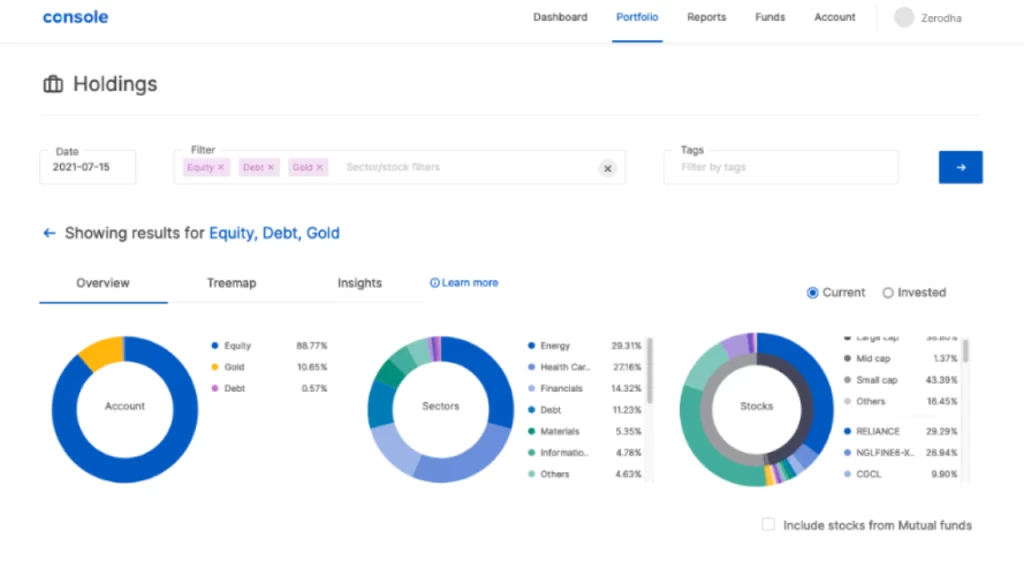
The Console feature provides investors with a comprehensive overview of their portfolio performance over specific periods. This tool proves invaluable for investors and chartered accountants in tax filing and wealth management. By offering a centralized platform for portfolio management, Zerodha enhances user convenience and fosters a holistic approach to financial planning.

Diversifying Investment Avenues

Zerodha’s evolution goes beyond traditional brokerage services. The platform has strategically expanded its product mix, now encompassing gold investing, international equities trading, bonds platforms, and mutual fund investments. This diversification not only enriches the investment landscape for users but also extends the lifetime value of their engagement with Zerodha.

Linguistic Inclusivity Through Regional Languages

Born in Bengaluru, Zerodha has transcended linguistic boundaries by offering its services in 12 Indian languages. This move goes beyond convenience—it supports the democratization of finance. By onboarding first-time investors in their native tongue, Zerodha addresses geographic and socioeconomic barriers, making financial services accessible across diverse regions of India.

Technological Advancement

Zerodha’s ascent has triggered a ripple effect in the brokerage industry. Incumbent brokerages, such as ICIC and HDFC, compelled by Zerodha’s success, have raced to match its technological capabilities and transparent pricing. This pursuit of user-centricity not only modernizes established players but also enhances market-wide accessibility, ushering the entire industry into a new era.

Inclusive Investing by Fostering Retail Participation

Zerodha’s commitment to educating and empowering users has transformed the investing landscape. By making investing more approachable, the platform has played a pivotal role in boosting retail participation. Impressively, over 15% of new demat account openings in India now flow through Zerodha, signifying a significant shift in the investment landscape, particularly in Tier 2/3 cities.

Industry Leadership Recognition

Zerodha’s founder, Nithin Kamath, has received notable recognition as a key influencer shaping India’s startup ecosystem, earning the prestigious TiE50 award. This acknowledgment not only affirms Kamath’s leadership but also cements Zerodha’s reputation as a trailblazer dragging India’s brokerage space into the 21st century. As an industry leader, Zerodha’s impact extends beyond its platform, influencing the broader narrative of innovation and excellence in the financial services sector.

👉 Conclusion: Sailing Towards Financial Success

In the ever-shifting landscape of financial services, a well-crafted marketing plan serves as the compass steering institutions toward success. From building trust and differentiation to targeting the right audience, ensuring compliance, and enhancing brand visibility, the strategic elements encapsulated in a marketing plan are the keystones of sustained success. As the sector evolves, the institutions equipped with this strategic compass not only navigate change but actively shape the narrative of triumph and client satisfaction. In the fusion of financial acumen and strategic marketing lies the roadmap to enduring success in the dynamic world of financial services.

Top 10 UX Design Fundamentals for Mobile Apps in 2024

In the dynamic landscape of technology, where mobile devices have become an integral part of our daily lives, creating a seamless and enjoyable user experience (UX) is paramount for the success of mobile apps. A well-designed mobile app not only attracts users but also keeps them engaged and satisfied. To achieve this, developers and designers must adhere to a set of UX design principles that focus on user-centricity, simplicity, and efficiency. In this blog, we will delve into the essential UX design principles for mobile apps that can elevate the overall user experience.

What Is UX Design?

User Experience (UX) design is a multidisciplinary approach focused on enhancing user satisfaction and interaction with a product or service. It encompasses the entire journey users have while engaging with a website, application, or any digital interface. UX design involves understanding user needs, conducting research, creating intuitive interfaces, and optimizing usability. By prioritizing user-centric principles, UX designers aim to craft seamless, enjoyable, and efficient experiences, ensuring that users find value and satisfaction in their interactions with digital products.

Why Is UX Design Essential for Mobile Apps?

User Experience (UX) design plays a pivotal role in the success and adoption of mobile apps, influencing user satisfaction and overall usability. Several key factors underscore the essential nature of UX design for mobile applications:

  • User-Centric Focus: UX design places users at the center of the design process, ensuring that apps meet their needs and expectations. By understanding user behaviors, preferences, and pain points, designers can create intuitive interfaces that resonate with the target audience.
  • Enhanced Usability: A well-designed UX simplifies navigation and interaction within the app, making it easy for users to accomplish tasks. Intuitive layouts and logical workflows contribute to a seamless user experience, reducing frustration and increasing user engagement.
  • Brand Perception: The user’s perception of a brand is significantly influenced by their experience with the app. A positive and user-friendly interface not only reflects positively on the app itself but also contributes to an overall favorable perception of the brand.
  • Increased User Retention: Apps that prioritize user experience are more likely to retain users. A positive initial experience, combined with ongoing improvements based on user feedback, fosters loyalty and encourages users to return to the app regularly.
  • Competitive Advantage: In a saturated app market, superior UX design can be a key differentiator. Apps that prioritize user satisfaction and usability are more likely to stand out, attracting and retaining a larger user base compared to their competitors.
  • Reduced Support Costs: A well-designed app minimizes user confusion and reduces the need for customer support. Intuitive interfaces and clear navigation paths decrease the likelihood of users encountering issues, ultimately lowering support costs for the app.
  • Adaptability to Diverse Devices: Mobile devices come in various sizes and specifications. UX design ensures that the app adapts seamlessly to different screen sizes, resolutions, and operating systems, providing a consistent and optimal experience across a wide range of devices.

A leading UI/UX design company in Kolkata helps implement UX principles appropriate for mobile apps.

10 UX Design Fundamentals for Mobile Apps

In the competitive realm of mobile app development, prioritizing user experience is a strategic imperative. By embracing these UX design principles, designers can create mobile apps that resonate with users and stand out in a crowded marketplace.

  •  User-Centered Design: Putting Users First

The cornerstone of effective UX design for mobile apps is adopting a user-centered approach. This involves understanding the target audience, their preferences, and behavior. Conducting user research, surveys, and usability testing can provide valuable insights into user needs and expectations. By prioritizing user feedback, designers can create an app that aligns with the users’ mental models, making it intuitive and easy to navigate.

  • Simplicity and Clarity: Less is More

One of the golden rules in UX design is to keep things simple. Mobile app users often have limited time and attention spans, making it crucial to present information in a clear and concise manner. Avoid cluttered interfaces and unnecessary features that can overwhelm users. Prioritize essential elements, streamline navigation, and use straightforward language to guide users through the app seamlessly. By minimizing complexity, designers can enhance user comprehension and overall satisfaction.

  • Intuitive Navigation: Guiding Users Effortlessly

Intuitive navigation is key to a positive user experience. Mobile app interfaces should be designed with a logical and predictable flow, allowing users to navigate effortlessly without feeling lost. Implement recognizable icons, organize content in a hierarchical structure, and ensure that the navigation patterns align with users’ mental models. Consistent placement of navigation elements across the app contributes to familiarity, reducing the learning curve for users.

  • Responsive and Adaptive Design: Catering to Diverse Devices

With the multitude of mobile devices available, including various screen sizes and resolutions, it’s crucial for mobile apps to adopt responsive and adaptive design principles. This ensures that the app provides a consistent and optimal experience across different devices. Responsive design allows the app interface to adjust dynamically to varying screen sizes, while adaptive design tailors the user experience based on the specific characteristics of each device. This approach guarantees a seamless and visually pleasing interaction for users on smartphones and tablets alike.

  • Feedback and Affordance: Keeping Users Informed

Providing timely and meaningful feedback is essential for user engagement. Users should be informed about the outcome of their actions, whether it’s a successful form submission, an error in input, or the completion of a task. Visual cues, such as animation or color changes, can be employed to signify different states and guide users through the app’s functionality. Additionally, affordance—making interactive elements visually suggestive of their functionality—enhances user understanding and encourages interaction.

  • Consistency Across Platforms: Unifying the User Experience

In an era where users seamlessly switch between various devices and platforms, maintaining consistency in design elements is crucial. The visual and interactive elements of a mobile app should align with the overall brand identity and remain consistent across different operating systems (iOS, Android) to provide a unified user experience. Consistency fosters a sense of reliability and familiarity, making users feel more at ease when transitioning between devices.

  • Performance Optimization: Speed Matters

User patience is limited, especially in the fast-paced world of mobile apps. Slow loading times and laggy interactions can lead to frustration and a high bounce rate. To mitigate these issues, designers must prioritize performance optimization. This includes compressing images, minimizing the use of resource-intensive animations, and optimizing code. A swift and responsive app not only enhances the user experience but also contributes to increased user retention and satisfaction.

  • Accessibility: Inclusive Design for All Users

Accessibility should be a fundamental consideration in mobile app design. By adopting inclusive design practices, designers can ensure that the app is accessible to users with diverse abilities and needs. This involves providing alternative text for images, implementing a logical tab order for keyboard navigation, and offering adjustable text sizes and color contrast settings. Prioritizing accessibility not only expands the app’s reach to a broader audience but also reflects a commitment to inclusivity.

  • Gestural Design: Utilizing Natural Interactions

As touchscreens dominate the mobile landscape, leveraging gestural design principles can enhance the user experience. Designers should incorporate intuitive gestures, such as swiping, pinching, and tapping, to mimic natural interactions. However, it’s crucial to strike a balance between innovation and usability—gestures should be discoverable, consistent, and not overly complex. Intuitive gestural design adds a layer of interactivity that aligns with users’ expectations and contributes to a more engaging mobile experience.

  • User Onboarding: Seamless Introduction to the App

First impressions matter, and effective user onboarding sets the tone for the entire mobile app experience. Design a user-friendly onboarding process that introduces key features, benefits, and functionalities gradually. Consider incorporating interactive tutorials or tooltips to guide users through the app’s interface. A seamless onboarding experience not only reduces user frustration but also increases the likelihood of users exploring the app’s full potential.

Final Thoughts

In conclusion, the world of mobile app development is continually evolving, and as users become more discerning, the significance of User Experience (UX) design cannot be overstated. The principles discussed in this blog serve as the foundation for creating mobile apps that not only meet but exceed user expectations.
A well-crafted user experience is not just a nicety; it’s a strategic imperative. It is the driving force behind user satisfaction, retention, and brand loyalty. In the competitive landscape of mobile applications, those who prioritize UX design emerge as leaders, captivating users with seamless interfaces, intuitive interactions, and a commitment to meeting diverse needs.
As technology evolves, adhering to UX principles is crucial. Investing in UX design goes beyond creating an app—it’s about crafting an experience that leaves a positive, lasting impression, fostering user loyalty for sustained success in the digital ecosystem. Hire a leading UI/UX design company in Kolkata to implement UX principles appropriate for mobile apps.

A Comprehensive Guide on Bounce Rate: Understanding, Analyzing, and Improving User Engagement

In the dynamic landscape of online analytics, understanding bounce rates is pivotal for website owners and marketers. Bounce rate, a metric that measures the percentage of visitors who navigate away from a site after viewing only one page, provides crucial insights into user engagement. In this comprehensive guide, we’ll delve into the intricacies of bounce rate, its significance, how to analyze it effectively, and practical strategies to improve user engagement on your website.

Understanding Bounce Rate: Definition and Significance

Bounce rate serves as a pivotal metric in web analytics, quantifying the percentage of single-page sessions on a website. This metric is indicative of the proportion of visitors who, after landing on a particular page, depart without delving further into the site’s content or engaging with additional pages.

Significance:

User Engagement Indicator:

The significance of bounce rate lies in its role as a barometer of user engagement. A high bounce rate often signals low engagement levels, suggesting that visitors are not encountering the content or experience they anticipated upon reaching the landing page.

Content Relevance Measure:

Moreover, bounce rate provides a valuable gauge of how well a website’s content aligns with user expectations. Content that resonates with visitors is more likely to keep them exploring additional pages, fostering a deeper connection.

Conversion Implications:

Understanding bounce rate is indispensable for businesses, given its potential impact on conversion rates. Elevated bounce rates may signify that visitors are not converting into customers or taking desired actions, necessitating a thorough examination of website elements to rectify the issue.

A leading Digital Marketing company in Kolkata helps you understand the impact of bounce rate and how to improve user experience.

Bounce Rate Metrics and Interpretation

Page-Specific Bounce Rate:

Delving into page-specific bounce rates unveils insights into the performance of individual content. Elevated bounce rates on specific pages may indicate issues related to content quality or relevance, guiding content optimization efforts.

Traffic Source Analysis:

Analyze bounce rates based on different traffic sources—organic, direct, and referral. Tailoring strategies for each channel based on these insights ensures a more targeted and effective approach.

Device-Based Bounce Rates:

Recognizing disparities between bounce rates on mobile and desktop platforms is crucial. Optimizing for mobile responsiveness is imperative, as a subpar mobile experience can contribute to higher bounce rates and a potential loss of audience.

Time on Page:

Correlating bounce rate with time spent on a page offers nuanced insights. A visitor spending a brief period on a page before bouncing may suggest a lack of interest, emphasizing the need for engaging content.

Factors Influencing Bounce Rate

Page Load Time:

The speed at which pages load significantly influences bounce rates. Optimal page speed is essential for a positive user experience, and efforts to enhance loading times can contribute to lower bounce rates.

Content Quality:

Ensuring content is both relevant and well-presented is paramount. High-quality, compelling content captivates users, reducing the likelihood of premature exits from the website.

User Experience Design:

A cluttered or confusing layout can drive users away. Prioritizing intuitive design elements guides visitors through a seamless browsing experience, fostering engagement and reducing bounce rates.

Clear Call-to-Actions (CTAs):

The absence of clear calls-to-action can result in user confusion and subsequent bouncing. Well-defined CTAs encourage continued engagement, reducing bounce rates and increasing the likelihood of conversions.

Analyzing Bounce Rate: Tools and Metrics

Google Analytics:

Google Analytics stands out as a robust tool for gaining detailed insights into bounce rates. It facilitates the analysis of bounce rates across various dimensions, including pages, traffic sources, and devices.

Benchmarking:

Comparing bounce rates with industry benchmarks provides context for performance evaluation and identifies areas for improvement. Benchmarking aids in setting realistic goals and targets for bounce rate optimization.

Custom Segments:

Creating custom segments within analytics tools allows for a more granular analysis. By segmenting based on demographics or user behavior, patterns in bounce rates become more apparent, guiding targeted optimization efforts.

Strategies to Improve Bounce Rate

Optimize Landing Pages:

Crafting compelling headlines, incorporating engaging visuals, and ensuring that landing pages deliver on the promises of marketing efforts are crucial steps in optimizing bounce rates.

Improve Content Quality:

Conducting a comprehensive content audit ensures that content remains relevant and of high quality. Regular updates, along with the integration of multimedia elements, contribute to enhanced engagement and reduced bounce rates.

Enhance User Experience:

Streamlining navigation, optimizing for mobile devices, and ensuring a user-friendly interface are pivotal for improving overall user experience and, consequently, reducing bounce rates.

A/B Testing:

Experimentation with various elements, including headlines, CTAs, and layouts, through A/B testing is instrumental in identifying what resonates best with the audience. Continuous refinement based on test results aids in ongoing bounce rate optimization.

Optimize Page Load Speed:

Addressing factors such as image compression, leveraging browser caching, and optimizing code contribute to improved page load speeds. This optimization, in turn, reduces the likelihood of users bouncing due to slow loading times.

Monitoring and Iterating: A Continuous Process

Regular Analysis:

Ongoing monitoring of bounce rates, taking into account factors like seasonality and shifts in user behavior, is crucial. Identifying trends and patterns allows for continuous optimization efforts to maintain optimal bounce rates.

Feedback Mechanisms:

Implementing feedback mechanisms, such as surveys or user testing, provides valuable insights directly from the audience. Understanding their experiences and potential reasons for bouncing informs iterative improvements.

Iterative Improvement:

Utilizing insights gathered from monitoring and feedback mechanisms, implementing iterative improvements becomes an ongoing process. Continuous optimization is vital to ensuring that bounce rates remain at an optimal level, aligning with evolving user expectations and industry standards.

Conclusion: Navigating the Bounce Rate Landscape

Understanding, analyzing, and improving bounce rates are integral components of a successful online strategy. By considering the factors influencing bounce rates, leveraging analytics tools, and implementing strategic improvements, website owners and marketers can enhance user engagement and drive meaningful conversions. A leading Digital Marketing company in Kolkata helps you understand the impact of bounce rate and how to improve user experience. Embrace the journey of continuous optimization, and let the insights from bounce rates guide your efforts to create a more engaging and user-friendly digital experience.

Unraveling the Dynamics: Plan-Driven Development vs. Agile Development

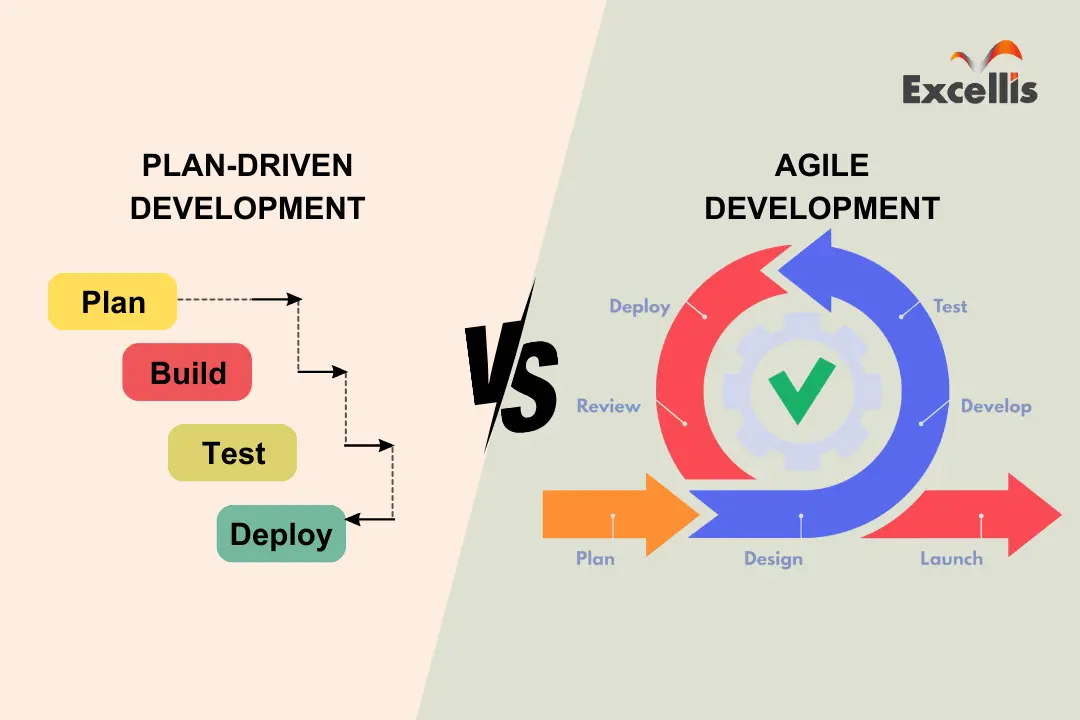
Embarking on a software development endeavor is much like constructing a house. With Plan-Driven Development, it’s akin to meticulously planning every facet of the house before laying the first brick. Detailed blueprints, precise timelines, and fixed costs guide the construction. Yet, when unforeseen changes arise, adjusting the initial plan becomes an intricate task, akin to renovating a house mid-construction.
On the flip side, Agile Development is like building a house in modular phases. You start with the foundation, get feedback, make adjustments, and iteratively enhance each section. It’s more adaptable, allowing for changes in design and functionality, mirroring a homeowner adapting their space over time.

✔ The Essence of Plan-Driven Development

Delving into the structured realms of software development, the essence of Plan-Driven Development lies in its meticulous approach, resembling a well-drawn map guiding the journey from project inception to completion.

📌 Rigidity in Planning

Plan-driven development, often referred to as the Waterfall model, follows a sequential, linear process. In this approach, the project is meticulously planned from inception to completion before any coding begins. Each phase, such as requirements gathering, design, implementation, testing, and deployment, is discrete and follows a predetermined order.

📌 Comprehensive Documentation

One hallmark of Plan-Driven Development is extensive documentation. Requirements, design specifications, and project plans are documented comprehensively at the outset. This documentation serves as a detailed blueprint, providing a roadmap for the entire development process.

📌 Fixed Scope and Timeline

Plan-driven development emphasizes fixed scopes and timelines. Changes to requirements or functionalities after the planning phase are challenging to accommodate, often requiring extensive revisions to the entire project plan. This rigidity can lead to challenges in adapting to evolving project needs.

📌 Minimal Client Involvement

Client involvement is typically limited in Plan-Driven Development until the final product is delivered. The client provides initial requirements, and the development team works autonomously until the project is complete. This can result in a lack of flexibility in incorporating client feedback during the development process.

A professional mobile app development company in Kolkata offers optimum plan-driven development and agile development strategies.

Unveiling the Agile Approach

Embarking on the dynamic landscape of software development, let’s unveil the Agile Approach—a flexible and iterative methodology that thrives in the ever-evolving world of coding creativity.

📌 Iterative and Incremental

In stark contrast, Agile Development embraces an iterative and incremental approach. The project is divided into small, manageable increments, called iterations or sprints, each delivering a potentially shippable product increment. This iterative nature allows for continuous improvement and adaptation throughout the development lifecycle.

📌 Embracing Change

Agile values responding to change over following a plan. Unlike Plan-Driven Development, Agile acknowledges that requirements evolve, and projects should be flexible enough to accommodate changes in real time. This adaptability is particularly advantageous in dynamic and fast-paced environments.

📌 Collaboration and Client Involvement

Agile places a strong emphasis on collaboration and client involvement throughout the development process. Regular meetings, feedback sessions, and continuous communication between development teams and clients ensure that the evolving project aligns with client expectations.

📌 Continuous Testing and Quality Assurance

Testing is an integral part of each iteration in Agile Development. Rather than leaving testing until the end of the project, Agile teams conduct continuous testing throughout the development process. This ensures that the software is of high quality from the early stages, reducing the likelihood of major defects in the final product.

Basic Differences Between Plan-Driven Development and Agile Development

The table below provides a concise overview of the fundamental distinctions between Plan-Driven Development and Agile Development.

Aspect Plan-Driven Development Agile Development
Approach Sequential, linear process Iterative and flexible
Planning Detailed planning before coding begins Adaptive planning with room for changes during development
Documentation Extensive documentation at the outset Minimal documentation, emphasis on working software
Flexibility Low flexibility, changes require extensive revisions High flexibility, accommodates changes throughout development
Client Involvement Limited until the final product is delivered Continuous client involvement and feedback throughout
Project Visibility Limited visibility until the project is complete Continuous visibility through iterative development cycles
Risk Management Comprehensive risk analysis and mitigation strategies Embraces change and adapts to risks dynamically

Choosing the Right Path

Let’s check out the crossroads of software development and explore the pivotal decision-making journey.

📌 Project Complexity and Predictability

The choice between Plan-Driven Development and Agile Development often hinges on the nature of the project. Plan-Driven approaches are suitable for projects with well-defined and stable requirements, where predictability is a key concern. On the other hand, Agile is favored in projects where requirements are expected to evolve, and flexibility is paramount.

📌 Client Involvement and Feedback

Consideration of client involvement and the ability to provide feedback during the development process is crucial. If clients seek active participation and appreciate adaptability to changing requirements, Agile is the preferred choice. If clients prefer a comprehensive, predetermined plan with minimal involvement until project completion, Plan-Driven Development may be more suitable.

📌 Industry Standards and Regulations

Certain industries, such as aerospace or healthcare, may have stringent regulations that favor a Plan-Driven approach. In scenarios where adherence to predefined processes is mandated, a Waterfall model or other Plan-Driven methodologies may be more aligned with regulatory requirements.

📌 Striking a Balance

In reality, the software development landscape often demands a nuanced approach that borrows elements from both Plan-Driven and Agile methodologies. Hybrid models, such as the Spiral model or the V-Model, seek to strike a balance by combining elements of predictability and adaptability.

Conclusion 

In conclusion, the choice between Plan-Driven Development and Agile Development is not a binary decision. Project managers and development teams must carefully assess project requirements, client expectations, and industry constraints to determine the most suitable approach. The dynamic nature of the software development industry ensures that methodologies will continue to evolve, with an ongoing quest to find the optimal balance between structure and flexibility. Hire premium mobile app development services in Kolkata for your business requirements. 

Unveiling the Top 10 Web Development Frameworks of 2024

In the vast realm of web development, choosing the right framework is akin to selecting the perfect tool for an artisan. Picture this: You’re a seasoned developer tasked with transforming a traditional brick-and-mortar store into a thriving e-commerce platform. The challenge is to create an immersive online shopping experience where users can seamlessly explore products, add them to their cart, and receive real-time updates on their purchases. This is where the choice of a web development framework becomes critical.

Top 10 Web Development Frameworks of 2024

As we embark on the journey into 2024, the demand for innovative, scalable applications is at an all-time high. Developers are seeking frameworks that not only streamline their workflow but also empower them to bring their digital visions to life. 

Explore the dynamic world of web development and uncover the top 10 frameworks making waves in the industry, each with its unique strengths and real-world applications. From crafting intuitive user interfaces to building dynamic web applications and embracing versatility in development, these frameworks are the guiding stars for developers navigating the ever-evolving web development landscape.

  • React.js: Unrivaled UI Library

React.js stands as an undisputed leader in the web development landscape, leveraging its declarative approach to construct user interfaces. Developed by Facebook, React empowers developers to fashion reusable UI components, significantly enhancing code maintenance efficiency. Its implementation of a virtual DOM elevates performance, while a robust community ensures a plethora of resources and third-party libraries, further solidifying its position at the forefront of modern web development.

  • Angular: Full-Featured Framework by Google

Angular, meticulously maintained by Google, emerges as a comprehensive framework tailored for crafting dynamic, single-page web applications. Armed with a robust architecture and a sophisticated two-way data binding system, Angular simplifies the development process. Notable features such as dependency injection, modular development, and a seamless CLI underscore its prowess, making it an invaluable asset for developers navigating large-scale, complex projects.

  • Vue.js: Progressive JavaScript Framework

Vue.js, celebrated for its simplicity and adaptability, has surged in popularity. As a progressive framework, Vue.js offers developers the flexibility to gradually integrate it into existing projects. Its lightweight design, coupled with a reactive data-binding system, positions Vue.js as an excellent choice for creating interactive and scalable user interfaces. The framework’s growing acclaim reflects its ability to strike a harmonious balance between simplicity and powerful functionality.

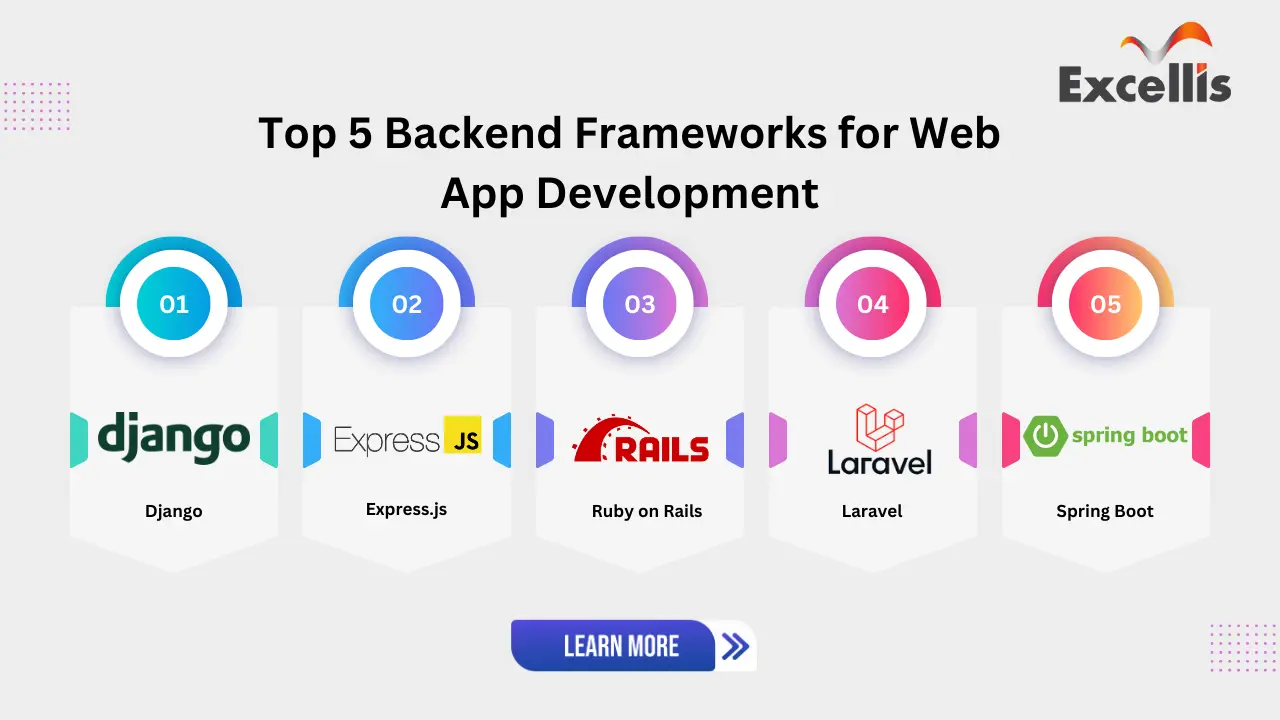
  • Django: High-Level Python Web Framework

Django, a high-level Python web framework, is a beacon of efficiency, prioritizing rapid development and pragmatic design. Following the model-view-template (MVT) architectural pattern, Django provides developers with a clear and straightforward structure. Boasting built-in features like an ORM system and an admin panel, Django expedites the development process, enhancing both productivity and code maintainability.

  • Express.js: Minimalistic Node.js Framework

Express.js remains the steadfast choice for crafting server-side applications with Node.js. Its minimalist design affords developers the freedom to cherry-pick components based on project requirements. Express.js streamline essential tasks such as routing and middleware implementation, seamlessly integrating with databases. This efficiency makes it a top-tier choice for constructing RESTful APIs, aligning perfectly with the needs of modern web development.

  • Ruby on Rails: Opinionated Web Framework

Ruby on Rails, renowned for its adherence to the convention over configuration philosophy, unlocks the potential for rapid development with minimal setup. Embracing the MVC architectural pattern, Rails fosters intuitive code organization. The inclusion of built-in tools for tasks like database migrations and testing propels productivity and maintainability, positioning Ruby on Rails as a preferred choice for developers valuing opinionated yet efficient frameworks.

Any leading web development company in Kolkata offers the best-suited framework for your website needs.

User also read: Top 5 Backend Frameworks for Web App Development in 2023

  • Spring Boot: Simplified Java Framework

Catering to Java enthusiasts, Spring Boot offers a streamlined approach to constructing production-ready applications. With a foundation in convention over configuration, Spring Boot minimizes boilerplate code, allowing developers to channel their focus into business logic. The framework’s comprehensive ecosystem spans various domains, including data, security, and messaging, presenting a holistic solution for Java developers navigating the intricacies of modern web development.

  • Laravel: Elegant PHP Framework

Laravel has ascended as a premier PHP framework, celebrated for its graceful syntax and expressive features. Simplicity is key as Laravel simplifies routine tasks such as routing, caching, and authentication, enriching the overall development experience. Laravel’s commitment to contemporary development principles, coupled with an active community, solidifies its standing as a reliable choice for PHP developers seeking an elegant yet robust framework.

  • Flask: Lightweight Python Framework

Flask, a microframework for Python, strikes a harmonious balance between simplicity and extensibility. Developers laud its minimalistic design, granting them the autonomy to select components as needed. Ideal for small to medium-sized projects, Flask delivers essential features while allowing ample room for customization and scalability. Flask’s lightweight yet powerful nature positions it as an excellent choice for developers seeking flexibility without compromising functionality.

  • Svelte: Next-Generation JavaScript Framework

Svelte introduces a paradigm shift by offloading heavy lifting from the browser to the build step. Through the compilation of components into highly optimized JavaScript at build time, Svelte achieves smaller and faster applications. Its simplicity and stellar performance have garnered widespread attention, establishing Svelte as a compelling choice for modern web development. In an era where efficiency is paramount, Svelte’s innovative approach stands as a testament to the evolving landscape of JavaScript frameworks.

Choosing the Right Framework for 2024

As developers navigate the dynamic landscape of web development, selecting the right framework is crucial for project success. Each of the frameworks mentioned above brings its strengths and caters to specific use cases.

Consider factors such as project requirements, development team expertise, and long-term maintainability when making your decision. Stay updated with the latest trends and advancements in the web development ecosystem to ensure your chosen framework aligns with the evolving needs of the industry.

Project Requirements:

Clearly define your project’s objectives, size, and complexity to align with a framework that meets specific needs.

📍 Scalability:

Evaluate the framework’s scalability to ensure it accommodates future growth and evolving project demands.

📍 Learning Curve:

Consider the learning curve of the framework, balancing the team’s existing skills with the need for new expertise.

📍 Community Support:

A robust community ensures ongoing support, updates, and a wealth of resources for problem-solving.

📍 Performance:

Assess the framework’s performance characteristics, especially vital for high-traffic applications.

📍 Security Measures:

Prioritize frameworks with built-in security features to safeguard your application against potential threats.

📍 Integration Capabilities:

Ensure seamless integration with databases, APIs, and third-party services for comprehensive functionality.

📍 Long-Term Maintenance:

Choose a framework with a stable release cycle and long-term support, minimizing future maintenance challenges.

Conclusion 

In the ever-changing world of technology, these frameworks serve as pillars of innovation, enabling developers to craft sophisticated, performant, and scalable web applications. A leading web development company in Kolkata offers the best-suited framework for your website needs. Whether you’re a seasoned developer or just starting, exploring and mastering these frameworks can significantly elevate your web development journey in 2024 and beyond.

Optimizing Your Marketing Funnel for the Customer Journey

The marketing funnel is a crucial concept in modern business strategies, representing the customer’s journey from awareness to purchase. It comprises stages such as awareness, consideration, and decision, illustrating the evolving relationship between consumers and brands. Optimizing the customer journey within this funnel is paramount for businesses seeking sustained success. By understanding and enhancing each stage, companies can tailor their marketing efforts, enhance customer experiences, and boost conversion rates. This introduction delves into the significance of optimizing the customer journey within the marketing funnel, emphasizing its pivotal role in cultivating brand loyalty, driving sales, and ultimately achieving long-term business objectives.

Understanding Customer Journey Stages

Embarking on a successful marketing strategy begins with a profound understanding of customer journey stages, unraveling the intricate path from initial awareness to final purchase.

Awareness:

Importance of Creating Awareness:

Establishing awareness is the cornerstone of the marketing funnel, laying the foundation for customer engagement. It enables brands to introduce themselves to potential customers, making them aware of products or services. This initial stage sets the tone for the entire customer journey, shaping perceptions and creating the opportunity for further interaction.

Channels for Building Awareness:

Diverse channels play a pivotal role in building awareness, ranging from social media platforms and content marketing to traditional advertising. Leveraging these channels strategically ensures that brands reach their target audience effectively, maximizing visibility and generating interest.

Consideration:

Nurturing Leads in the Consideration Stage:

The consideration stage is about guiding potential customers towards a decision. Nurturing leads involves providing valuable information, addressing concerns, and showcasing the unique selling propositions of products or services. This phase is critical for transforming interest into serious consideration.

Content Strategies for Consideration:

Content strategies in the consideration stage should focus on in-depth information, comparisons, and case studies. Providing comprehensive content helps potential customers make informed decisions and establishes the brand as a reliable source of information.

Decision:

Closing the Deal in the Decision Stage:

The decision stage is where potential customers become paying customers. This phase involves effective sales tactics, personalized communication, and incentives that encourage conversion. Clear calls-to-action and a seamless purchasing process are essential elements.

Influencing Factors in Decision-Making:

Various factors influence decision-making, including pricing, reviews, and brand reputation. Understanding these factors allows businesses to tailor their approach, addressing concerns and reinforcing the value proposition.

Post-Purchase:

Enhancing Customer Experience Post-Purchase:

Post-purchase engagement is crucial for customer retention. Enhancing the customer experience involves seamless onboarding, post-purchase communication, and support, ensuring customers feel valued beyond the transaction.

Strategies for Retaining Customers:

Retaining customers requires ongoing efforts such as loyalty programs, personalized communication, and soliciting feedback. Building a long-term relationship with customers contributes to brand advocacy and repeat business, adding to the overall success of the marketing funnel.

Leverage the expertise of professionals for an optimized marketing funnel with a digital marketing company in Kolkata.

Mapping Content to Customer Journey

In the intricate realm of digital marketing, success hinges on the meticulous art of ‘Mapping Content to Customer Journey.’ This strategic approach involves aligning tailored content with each stage of the customer’s path, from initial awareness to final conversion, creating a seamless and engaging experience that resonates with the evolving needs and preferences of the audience.

Content Personalization:

Tailoring Content for Different Stages:

Content personalization involves crafting tailored messages for each stage of the customer journey, from awareness to decision. This ensures that the right information reaches the audience at the right time, optimizing engagement and guiding them seamlessly through the marketing funnel.

Using Data for Personalization:

Leveraging data insights enables effective content personalization. Analyzing customer behaviors and preferences allows businesses to deliver relevant and meaningful content, fostering a more personalized and engaging experience that resonates with individual needs.

Storytelling in Marketing:

Crafting Compelling Narratives:

Storytelling in marketing revolves around creating compelling narratives that captivate audiences. By weaving stories around brand values, products, or customer experiences, businesses can evoke emotions and build a connection with their audience, making the content more memorable and impactful.

Impact of Storytelling on Customer Engagement:

Storytelling goes beyond conveying information; it forges a deeper connection with consumers. The emotional resonance of a well-crafted narrative enhances customer engagement, fostering loyalty and a sense of shared values between the brand and its audience.

Utilizing Technology in Funnel Optimization

Here’s how businesses can harness the power of cutting-edge tools and strategies to refine their marketing funnels, enhance customer experiences, and stay ahead in today’s dynamic digital landscape.

Marketing Automation:

Streamlining Processes with Automation:

Marketing automation optimizes efficiency by automating repetitive tasks, allowing businesses to streamline workflows. From email campaigns to lead nurturing, automation enhances productivity, enabling marketers to focus on strategy and creativity rather than manual processes.

Choosing the Right Automation Tools:

Selecting appropriate automation tools is crucial for success. The right tools align with business goals, offering features like lead scoring, customer segmentation, and personalized communication. Strategic tool selection ensures a seamless integration of automation into marketing strategies.

Data Analytics:

Leveraging Data for Informed Decisions:

Data analytics empowers businesses to make informed decisions by extracting valuable insights from customer behavior and campaign performance. Utilizing data-driven strategies enhances targeting precision and allows for continuous refinement of marketing efforts.

Key Metrics to Track in Funnel Optimization:

In funnel optimization, tracking key metrics such as conversion rates, customer acquisition cost, and engagement rates is essential. Data analytics provides a quantitative understanding of the customer journey, aiding in the identification of areas for improvement and overall marketing success.

Integrating Social Media Strategies

Here’s how to seamlessly integrate social media strategies into your business arsenal, unlocking the power of digital engagement and fostering meaningful connections with your audience.

Social Listening:

Understanding Customer Sentiment:

Social listening involves monitoring online conversations to grasp customer sentiment. By analyzing mentions and comments, businesses gain valuable insights into public perception, allowing them to respond promptly to feedback and adapt strategies to meet customer expectations.

Responding Effectively to Social Feedback:

Effective social listening goes beyond observation; it includes proactive engagement. Responding promptly and thoughtfully to social feedback builds trust and loyalty, showcasing a brand’s commitment to customer satisfaction and fostering positive relationships.

Influencer Marketing:

Collaborating with Influencers for Funnel Optimization:

Integrating influencers into marketing strategies enhances funnel optimization by leveraging their reach and credibility. Influencers can introduce products, create awareness, and drive engagement, strategically aligning with specific stages of the customer journey.

Measuring the Impact of Influencer Campaigns:

Evaluating the impact of influencer campaigns is crucial for ROI. Metrics such as engagement rates, click-throughs, and conversions help businesses assess the effectiveness of influencer collaborations, ensuring a data-driven approach to future influencer marketing strategies.

A/B Testing for Continuous Improvement

Unlocking continuous improvement in your strategies is just a test away! Dive into the world of A/B Testing, where insightful experimentation reigns supreme. Here’s how you can harness the power of A/B testing to refine, optimize, and elevate your marketing game to new heights.

Importance of A/B Testing:

Optimizing Elements in the Funnel:

A/B testing is instrumental in refining and optimizing various elements within the marketing funnel. By comparing two versions of a webpage, email, or ad, businesses can identify the most effective design, content, or call-to-action, leading to improved conversion rates and overall funnel performance.

Interpreting A/B Test Results:

Interpreting A/B test results after organic or ad marketing requires a nuanced understanding of statistical significance. Analyzing data from variations helps marketers draw insights into consumer preferences, informing strategic decisions for ongoing optimization and ensuring that changes positively impact the customer journey.

Personalization through Customer Segmentation:

Here’s how tailoring your approach to demographic and behavioral factors can elevate your marketing strategies, ensuring a more profound connection with your audience and driving superior results throughout the customer journey.

Segmentation Strategies:

Demographic Segmentation:

Demographic segmentation involves categorizing customers based on factors like age, gender, income, and location. Tailoring marketing efforts to specific demographic groups allows for more personalized communication, addressing the unique preferences and needs of each segment.

Behavioral Segmentation:

Behavioral segmentation classifies customers based on their actions, such as purchasing behavior, website interactions, or engagement with marketing campaigns. Understanding these behaviors enables businesses to create targeted and personalized experiences, enhancing customer satisfaction and increasing the effectiveness of marketing strategies.

Importance of Mobile-Friendly Funnels:

Mobile Usage Trends:

With the increasing prevalence of smartphones, mobile usage has become integral to consumers’ daily lives. Therefore, ensuring mobile-friendly marketing funnels is paramount. Statistics show a significant shift towards mobile browsing and shopping, emphasizing the need for responsive and optimized experiences on smaller screens.

Mobile Optimization Best Practices:

Mobile optimization involves creating seamless, user-friendly experiences. Best practices include responsive web design, fast-loading pages, and intuitive navigation. Prioritizing mobile optimization not only caters to the growing mobile audience but also positively impacts search engine rankings, as search algorithms prioritize mobile-friendly websites.

Aligning Sales and Marketing Efforts:

Common Challenges in Alignment:

Effective collaboration between sales and marketing teams is often hindered by communication gaps and differing priorities. Misalignment can lead to missed opportunities and a disjointed customer experience. Overcoming these challenges requires a shared understanding of goals and improved communication channels.

Strategies for Effective Collaboration:

Strategies for aligning sales and marketing efforts involve fostering open communication, establishing shared goals, and implementing integrated technologies. Regular meetings, joint planning sessions, and feedback loops enhance collaboration, ensuring a cohesive approach throughout the entire customer journey.

Monitoring and Adapting to Trends:

Importance of Industry Awareness:

Industries are dynamic, and staying informed about evolving trends is crucial for maintaining a competitive edge. Industry awareness enables businesses to anticipate changes in consumer behavior, technology, and market dynamics, allowing for proactive adjustments to marketing strategies.

Adapting Strategies to Emerging Trends:

Adapting strategies to emerging trends involves a proactive approach to incorporate new technologies, consumer preferences, and industry shifts. Whether it’s the rise of new social media platforms, changes in search algorithms, or evolving customer expectations, businesses that monitor and adapt to trends stay agile and relevant in the market. Regular analysis of data and market research facilitates timely adjustments to strategies, ensuring sustained success in the ever-changing landscape.

Challenges in Funnel Optimization

Overcoming Implementation Hurdles:

Implementing funnel optimization strategies often faces challenges such as resistance to change, technical complexities, or insufficient resources. Overcoming these hurdles requires a well-communicated plan, employee training, and a phased approach to implementation. A collaborative effort and clear communication can mitigate resistance and facilitate successful execution.

Addressing Funnel Optimization Pitfalls:

Pitfalls in funnel optimization may include overlooking certain stages, neglecting user experience, or misinterpreting data. Identifying and addressing these issues is crucial for maintaining a streamlined customer journey. Regular audits, A/B testing, and feedback analysis help uncover and rectify potential pitfalls, ensuring ongoing refinement of the optimization process.

Conclusion

In conclusion, navigating the intricacies of funnel optimization requires a comprehensive approach, addressing challenges from mobile responsiveness to aligning sales and marketing efforts. Overcoming implementation hurdles and addressing pitfalls through continuous monitoring and adaptation are key. As we recap essential strategies like social listening, content personalization, and data analytics, the emphasis on collaboration and industry awareness remains paramount. Funnel optimization is not a static task but an ongoing, dynamic process. Recognizing its continuous nature ensures businesses stay agile, responsive, and well-positioned to meet the evolving needs of their audience in the ever-changing landscape of the market.

Get professional expertise for an optimized marketing funnel with a digital marketing company in Kolkata.

Top 5 Backend Frameworks for Web App Development in 2023

In the dynamic realm of web app development, backend frameworks shape application functionality and efficiency, providing a structured foundation for developers to create robust, scalable systems. Their significance spans from data storage to server-side logic, impacting performance, security, and user experience. This introduction illuminates their crucial role in modern web development.As technology progresses, web app development evolves intricately. We’ve moved from static HTML pages to intricate, dynamic applications requiring sophisticated backend solutions. This section delves into this evolution, highlighting key milestones. Understanding this journey is vital for appreciating the necessity of cutting-edge backend frameworks in today’s digital landscape, guiding us through transformative phases shaping modern web development.

Criteria for Evaluating Backend Frameworks

  • Performance benchmarks:

When assessing backend frameworks, performance benchmarks stand as a cornerstone. Evaluating the execution speed, resource utilization, and responsiveness of a framework under varying conditions provides invaluable insights. Robust benchmarks ensure that the chosen backend framework aligns with the application’s performance requirements, optimizing user experiences and responsiveness.

  • Community support and documentation:

The strength of a backend framework is often reflected in its community support and documentation. A vibrant and engaged community fosters continuous improvement, ensuring quick issue resolution and ongoing updates. Extensive, well-maintained documentation is equally vital, serving as a guide for developers. This section explores how community dynamics and documentation quality contribute to the overall usability and reliability of a backend framework.

  • Scalability and flexibility:

Scalability and flexibility are paramount considerations in the evaluation process. An adept backend framework should seamlessly adapt to the evolving needs of an application, accommodating growth without sacrificing performance. This segment delves into the scalability mechanisms offered by backend frameworks, examining how they handle increasing workloads and maintain flexibility in adapting to diverse development scenarios. Understanding these criteria aids developers in selecting frameworks that align with the dynamic demands of modern web applications.

Find the best web development company in Kolkata for a robust website for your business needs. 

5 Industry Best Backend Frameworks for Web App Development in 2023

Framework 1: Django

Django, a high-level Python web framework, facilitates rapid development with a clean and pragmatic design. It follows the model-view-template (MVT) architectural pattern, emphasizing DRY (Don’t Repeat Yourself) and convention over configuration. Django’s batteries-included philosophy integrates essential components to simplify complex tasks, making it a robust choice for web development.

Key Features:

Django boasts an ORM for database management, a powerful templating engine, and built-in admin panels. Its security features, including protection against common vulnerabilities, contribute to its appeal. Django Rest Framework extends its capabilities for building RESTful APIs, enhancing versatility.

Use Cases:

Django finds applications in diverse domains, from content management systems (e.g., Django CMS) to e-commerce platforms (e.g., Saleor). Its versatility accommodates projects of varying scales, making it suitable for startups and large enterprises alike.

Pros:

  • Rapid development with reusable components.
  • Strong emphasis on security.
  • Extensive documentation and an active community.

Cons:

  • Learning curve for beginners.
  • Convention-heavy, limiting flexibility in certain scenarios.

Framework 2: Express.js

Express.js, built on Node.js, is a minimalist web application framework designed for creating robust APIs and web applications. Leveraging JavaScript on both the server and client sides, it excels in handling asynchronous operations.

Core Features of Express.js:

Express.js simplifies server-side operations with a minimalist, flexible structure. Middleware support enhances functionality, allowing developers to craft modular, extensible applications. It is renowned for its performance and scalability, making it a favorite for building real-time applications.

Real-world Applications:

Express.js is prevalent in building dynamic single-page applications (SPAs) and RESTful APIs. Its simplicity attracts developers working on microservices architecture, enabling efficient creation of scalable and modular systems.

Comparisons with Other Frameworks:

Express.js is often compared with Flask in the Python ecosystem and Sinatra in the Ruby world. Its lightweight nature and emphasis on flexibility distinguish it, especially when compared to more comprehensive frameworks like Django.

Framework 3: Ruby on Rails

Ruby on Rails (Rails) is a full-stack web application framework optimized for programmer happiness. Its convention over configuration approach streamlines development, allowing developers to focus on writing code rather than tedious configuration.

Notable Features:

Rails integrates an ORM, ActiveRecord, simplifying database interactions. Conventionally, it emphasizes the use of RESTful routes and convention-driven development. Additionally, it includes automated testing tools, enhancing the development workflow.

Success Stories:

Ruby on Rails has powered successful applications such as Basecamp, GitHub, and Shopify. Its elegant syntax and developer-friendly environment have contributed to its popularity in startup ecosystems.

Limitations:

  • Learning curve for beginners.
  • Can be perceived as monolithic for smaller projects.

Considerations:

  • Continuous updates maintain relevance.
  • Robust community support.

Framework 4: Laravel

Laravel, a PHP web application framework, prioritizes elegance and simplicity. It employs the Model-View-Controller (MVC) architecture and offers features like routing, Eloquent ORM, and Blade templating, streamlining development.

Eloquent ORM and Blade Templating:

Laravel’s Eloquent ORM simplifies database operations, while Blade templating provides a concise syntax for views. These features contribute to the framework’s appeal for developers seeking an expressive and efficient PHP solution.

Applications in Modern Web Development:

Laravel excels in building RESTful APIs and scalable web applications. It’s the framework of choice for projects requiring a balance between performance and developer-friendly syntax, and it has gained popularity in the Laravel Spark ecosystem for subscription-based services.

Community and Updates:

Laravel boasts a robust community and frequent updates, ensuring the framework remains modern and secure. The Laravel ecosystem includes Laravel Nova for administration panels and Laravel Mix for asset compilation, enhancing its versatility.

Framework 5: Spring Boot

Spring Boot, a part of the larger Spring framework, simplifies the development of Java-based enterprise applications. It embraces convention over configuration, reducing boilerplate code and accelerating development.

Integration with Java:

Spring Boot seamlessly integrates with Java, leveraging the extensive Java ecosystem. It facilitates the creation of standalone, production-grade Spring-based applications with minimal effort.

Microservices Architecture:

Spring Boot is a prominent choice for microservices architecture, offering built-in support for creating independent, deployable services. Its modular design and embedded servers enhance scalability and ease of deployment.

Industry Adoption and Support:

Widely adopted in enterprise environments, Spring Boot benefits from strong industry support. Its compatibility with various databases, messaging systems, and cloud platforms makes it an ideal choice for diverse enterprise applications.

Comparative Analysis


Framework Performance Benchmarking Community Preferences and Trends Scalability and Adaptability
Django Demonstrates robust performance with efficient database handling Active Python community support, trending in large-scale applications Scalable for various project sizes, adaptable to diverse needs
Express.js Recognized for high performance, particularly in handling I/O Strong Node.js community, trending for real-time applications Highly scalable, particularly suited for microservices architecture
Ruby on Rails Efficient performance, particularly for convention-driven apps Strong Ruby community, popular in startup ecosystems Scalable for medium to large projects, adaptable to business growth
Laravel Offers excellent performance and scalability for PHP projects Active PHP community, trending for modern PHP development Highly scalable, adaptable to various project sizes
Spring Boot Demonstrates robust performance and is widely used in enterprises Large Java community, preferred for enterprise-level applications Designed for scalability, particularly suitable for microservices

Emerging Trends in Backend Development

Serverless Architecture:

Serverless architecture, an evolving paradigm, shifts the focus from traditional server management to a cloud-based, event-driven model. Developers can run functions without managing servers directly, reducing operational overhead. This trend streamlines development, enhances scalability, and optimizes cost efficiency by charging only for actual resource consumption.

GraphQL Integration:

GraphQL, an alternative to REST APIs, empowers clients to request precisely the data they need. Its flexibility in data retrieval reduces over-fetching, improving efficiency. As an emerging trend, GraphQL integration provides developers with a more efficient and customizable approach to data communication in web applications.

Containerization and Orchestration:

Containerization (e.g., Docker) and orchestration (e.g., Kubernetes) have become integral to modern backend development. Containers encapsulate applications, ensuring consistency across various environments. Orchestration tools simplify deployment, scaling, and management of containerized applications. This trend enhances portability, scalability, and the overall efficiency of backend systems.

Best Practices in Choosing a Backend Framework

Aligning with Project Requirements:

Selecting a backend framework should align with the specific requirements of the project. Consider factors such as scalability, performance, and ecosystem compatibility. Django, for instance, suits projects with intricate database needs, while Express.js excels in real-time applications. A tailored approach ensures the chosen framework complements the project’s goals.

Considering Developer Expertise:

Evaluate the team’s expertise before selecting a framework. Familiarity with a particular language or ecosystem can expedite development and minimize the learning curve. Assess the framework’s documentation and community support to gauge the available resources for overcoming challenges. A well-matched framework and skilled team contribute to efficient development cycles.

Future-Proofing Considerations:

Future-proofing involves selecting a framework that can evolve with technology trends. Assess the framework’s commitment to updates, community support, and adaptability to emerging technologies. Choosing a framework with a forward-looking mindset ensures that the application remains relevant and maintainable as the technology landscape evolves.

Challenges and Solutions in Backend Development

Common Challenges Faced by Developers:

Backend development presents challenges such as scalability bottlenecks, security vulnerabilities, and performance optimization hurdles. Integrating third-party services, handling large datasets, and maintaining consistency across distributed systems are additional complexities developers encounter.

Solutions and Workarounds:

Scalability challenges can be addressed through efficient load balancing and caching mechanisms. Security vulnerabilities require continuous monitoring, regular updates, and adherence to best practices. Performance optimization often involves database indexing, asynchronous processing, and code profiling. Integrating third-party services necessitates robust error handling and adherence to service-level agreements.

Learning from Others’ Mistakes:

Understanding common pitfalls and learning from others’ experiences is crucial in backend development. Engaging in community forums, participating in knowledge-sharing sessions, and staying updated on case studies contribute to a collective learning experience. Learning from mistakes helps developers anticipate challenges and proactively implement solutions.

Framework Updates and Roadmaps

Recent Updates from Each Framework:

Django: 

Recent updates focus on enhancing performance, security, and asynchronous support. Features like Django Channels enable real-time capabilities, aligning with modern web application demands.

Express.js: 

Ongoing updates refine performance and security aspects. The framework evolves with Node.js advancements, ensuring compatibility and optimization for real-time applications.

Ruby on Rails: 

Continuous updates introduce improvements in speed, security, and developer experience. Features like Action Mailbox and Action Text enhance Rails’ capabilities.

Laravel:

Laravel’s recent updates prioritize developer convenience and application scalability. Improvements in the Laravel ecosystem, including Laravel Mix and Nova, contribute to a more streamlined development experience.

Spring Boot: 

Recent updates focus on enhancing support for microservices architecture, optimizing performance, and maintaining compatibility with the latest Java releases.

Future Roadmaps and Anticipated Features:

Django: 

Future roadmaps suggest a continued focus on performance optimization, support for newer Python versions, and enhancements in developer tools for a more seamless experience.

Express.js: 

The roadmap includes further integration with modern JavaScript features and continuous improvements in scalability and real-time capabilities.

Ruby on Rails: 

Upcoming features aim to boost developer productivity, improve scalability, and introduce tools that align with evolving web development standards.

Laravel: 

Future plans include advancements in GraphQL support, improvements in API development, and enhancements in the Laravel ecosystem to maintain its status as a versatile PHP framework.

Spring Boot: 

The roadmap emphasizes ongoing support for microservices architecture, compatibility with the evolving Java ecosystem, and enhancements in deployment and monitoring tools.

Conclusion

The ever-evolving world of backend development demands a nuanced understanding of frameworks, emerging trends, and best practices. A leading web development company in Kolkata offers a website that matches all your business requirements. From the robust versatility of Django to the real-time efficiency of Express.js, developers face a diverse array of choices. As serverless architecture, GraphQL integration, and containerization reshape the landscape, staying informed is paramount. Best practices, aligning with project needs and considering future-proofing, guide intelligent framework selection. Acknowledging challenges and learning from collective experiences fosters growth.

Optimizing React for Search Engines: Strategies for SEO-Friendly Web Apps

SEO is the foundation of online visibility, boosting a website’s ranking and driving organic traffic. It’s vital for effective audience reach. Incorporating SEO into web development ensures content is easily discoverable. However, React, a dynamic interface builder, poses unique SEO challenges. Traditional search crawlers may struggle with React’s dynamic content. Overcoming this requires clever techniques like server-side rendering, ensuring React apps or websites rank well and are search-friendly. A professional web development company in Kolkata offers React websites that are SEO-friendly.
This blog will discuss the strategies to create an SEO-friendly web app with React. So, let’s begin!

Understanding SEO Basics

Search Engine Crawling and Indexing

Search engines like Google use crawlers to navigate the web, scanning websites for content. Once crawled, the information is indexed, cataloging it for future retrieval in search results. Ensuring a website is easily accessible and comprehensible to these crawlers is essential for effective SEO.

Keyword Research and Optimization

Keyword research involves identifying users’ words and phrases when searching for specific content. Integrating relevant keywords into website content, meta descriptions, and headers enhances visibility in search results, aligning the site with user intent.

On-Page SEO Best Practices

On-page SEO focuses on optimizing individual web pages to rank higher and earn more organic traffic. This includes optimizing title tags, meta descriptions, heading tags, URL structure, and content quality. Complying with on-page SEO best practices ensures a website is well-positioned for search engine success.

Incorporating SEO in React

Rendering Techniques and SEO Implications

In React, the choice of rendering technique impacts SEO. Traditional client-side rendering (CSR) often poses challenges for search engine crawlers due to its reliance on JavaScript to assemble content. Understanding these implications is crucial for effective SEO integration.

Server-Side Rendering (SSR) vs Client-Side Rendering (CSR)

The SEO community debates the merits of Server-Side Rendering (SSR) versus Client-Side Rendering (CSR) in React. SSR generates HTML on the server, offering search engines pre-rendered content. CSR assembles content dynamically on the client side, potentially causing SEO challenges. Evaluating the trade-offs and selecting the right approach is a critical decision in React development.

Find a leading Reactjs development company to build an SEO-friendly website.

Hybrid Rendering Approaches

Hybrid rendering combines the best of SSR and CSR. It allows for server-side rendering of critical content while utilizing CSR for dynamic elements. This approach strikes a balance between SEO-friendly pre-rendered content and interactive client-side functionality.

Structuring Content for SEO

Semantic HTML Elements in React

Using semantic HTML elements in React helps search engines understand the content’s structure and context. Properly structured HTML enhances the user experience and improves SEO rankings.

Proper Usage of Headings and Subheadings

Headings (H1, H2, H3, etc.) provide a hierarchy to content, making it more digestible for users and search engines. Using headings correctly is a fundamental aspect of on-page SEO.

Creating SEO-Friendly URLs

Optimizing URLs with descriptive and keyword-rich slugs not only aids user navigation but also enhances SEO. Clean and concise URLs contribute to better search engine rankings.

Optimizing Images and Media

Alt Texts for Images and Accessibility

Adding descriptive alt texts to images improves accessibility for visually impaired users and provides search engines with valuable context about the image content. This accessibility feature indirectly benefits SEO.

Lazy Loading for Improved Performance and SEO

Lazy-loading images can enhance website performance by reducing page load times. Improved performance positively impacts user experience and SEO ranking.

Sitemaps for Media Files

Incorporating media files into a sitemap helps search engines discover and index these assets, ensuring they contribute to SEO efforts. A professional web development company in Kolkata helps incorporate such a strategy for an SEO-friendly React web app.

Enhancing User Experience and SEO

Page Load Speed and SEO Ranking

Fast-loading pages are favoured by users and search engines alike. Google, for instance, considers page speed in its ranking algorithm. Optimizing site performance is crucial for SEO success.

Mobile Optimization and SEO

As mobile device usage continues to surge, mobile optimization is essential. A mobile-friendly design enhances user experience and positively influences search engine rankings.

User Engagement Metrics and SEO

User engagement metrics like bounce rate, time on page, and click-through rate are used by search engines to assess content quality. Higher engagement correlates with improved SEO rankings.

Navigational Best Practices

Creating Intuitive Navigation Menus

Intuitive navigation menus help users find content easily, leading to better user experience and SEO rankings. Well-structured menus enhance crawlability.

Implementing Breadcrumbs for Improved UX and SEO

Breadcrumbs provide users with a clear path back to the homepage or parent pages. They improve navigation and contribute to better SEO rankings.

Technical SEO Considerations

Proper Use of Meta Tags in React

Meta tags, including title tags and meta descriptions, play a crucial role in SEO. Properly crafted meta tags provide concise information about a page’s content, influencing click-through rates and search rankings.

Handling Redirects and Canonical URLs

Properly managing redirects and canonical URLs ensures that search engines index the right content. Avoiding duplicate content issues is vital for SEO. A professional web development company in Kolkata helps incorporate such a strategy for an SEO-friendly React web app.

Robots.txt and Noindex Tags

Robots.txt and no-index tags allow webmasters to control which parts of the website are indexed by search engines. They are valuable tools for managing SEO.

Handling Dynamic Content

SEO-friendly AJAX and React

Ensuring AJAX requests and dynamic content are SEO-friendly involves using techniques like server-side rendering or providing pre-rendered content to search engines.

Hashbang URLs vs HTML5 PushState

Choosing between hashbang URLs (#!) and HTML5 pushState for routing in single-page applications impacts URL structure and SEO. Evaluating the trade-offs is important when designing SEO-friendly SPAs.

SEO for Single Page Applications (SPAs)

Challenges and Solutions for SEO in SPAs

SPAs can pose SEO challenges due to their reliance on client-side rendering. Strategies like pre-rendering and server-side rendering are critical for overcoming these challenges.

Implementing Server-Side Rendering (SSR) in SPAs

Implementing SSR in SPAs enables search engines to receive pre-rendered HTML, improving SEO visibility and ensuring content is indexed effectively.

Accessibility and SEO

Importance of Accessibility in SEO Rankings

Accessibility is not only a legal and ethical requirement but also influences SEO rankings. Websites that provide equal access to all users receive preferential treatment from search engines.

React ARIA and Accessibility Best Practices

React ARIA (Accessible Rich Internet Applications) is a set of attributes that enhances accessibility. Implementing these attributes and following accessibility best practices contributes to better SEO rankings.

Schema Markup and Rich Snippets

Implementing Schema.org Markup in React

Schema markup provides structured data to search engines, enriching search results with additional information. Implementing schema markup in React can lead to more appealing and informative search listings.

Enhancing Search Results with Rich Snippets

Rich snippets are visually enhanced search results that attract user attention. Implementing schema markup can enable rich snippets, improving click-through rates and SEO visibility. A professional web development company in Kolkata helps incorporate such a strategy for an SEO-friendly React web app.

Tracking and Analyzing SEO Performance

Setting up Google Analytics for React Apps

Tracking and analyzing SEO performance is essential for optimizing strategies. Setting up Google Analytics for React apps provides insights into user behaviour and site performance.

Monitoring Rankings and Organic Traffic

Continuous monitoring of search rankings and organic traffic helps webmasters adapt SEO strategies. Regular assessments ensure a website remains competitive in search results.

Content Quality and Relevance

Creating High-Quality, Relevant Content

Compelling content is the linchpin of successful SEO. Crafting informative, engaging material that addresses user queries and provides value is paramount. Quality content attracts organic traffic and encourages user interaction, positively impacting search rankings.

Avoiding Duplicate Content Issues

Duplicate content can hinder SEO efforts. Ensuring each page offers unique, valuable information is crucial. Implementing canonical tags and avoiding content duplication across different URLs helps search engines understand which version to index.

Social Signals and SEO

Leveraging Social Media for SEO

Social signals, such as shares, likes, and comments on social media platforms, can indirectly impact SEO. Engaging content that resonates with users often leads to increased social activity, potentially influencing search engine rankings.

Incorporating Open Graph Tags

Open Graph tags enable websites to control how their content appears when shared on social media platforms. Proper implementation enhances the visual appeal of shared links, potentially driving more traffic and improving SEO.

Link Building and Backlinks

Quality Backlinks and SEO

High-quality backlinks from authoritative websites signal to search engines that a site offers valuable content. Earning organic, relevant backlinks is a critical aspect of off-page SEO that positively impacts rankings.

Natural Link Acquisition Strategies

Natural link acquisition involves creating valuable content that naturally attracts backlinks. Providing unique insights, conducting original research, and offering exceptional resources are effective strategies for earning quality links.

Local SEO Strategies

Importance of Local SEO

For businesses with a local presence, optimizing for local search is crucial. Local SEO ensures that businesses appear in relevant local search results, helping attract nearby customers.

Google My Business Optimization

Optimizing a Google My Business profile enhances local visibility. Providing accurate business information, images, and customer reviews on the profile contributes to better local search rankings. A professional digital marketing company in Kolkata helps incorporate such a strategy for an SEO-friendly React web app.

Keeping Abreast of Algorithm Changes

Staying Updated with SEO Trends

Search engine algorithms evolve over time, affecting search rankings. Staying informed about SEO trends, algorithm updates, and best practices ensures that optimization efforts remain effective.

Adapting Strategies to Algorithm Changes

When search algorithms undergo significant updates, adapting SEO strategies becomes essential. Analyzing the impact of algorithm changes and adjusting optimization techniques ensures continued success in search rankings.

User Feedback and User Experience

Incorporating User Feedback

Listening to user feedback provides valuable insights into improving website content and functionality. Addressing user concerns and preferences can lead to a more satisfying experience, ultimately benefiting SEO.

User Experience as a Ranking Factor

Search engines prioritize user experience when determining search rankings. Factors such as page load speed, mobile-friendliness, and intuitive navigation significantly influence SEO success.

Conclusion

In the dynamic world of web development, optimizing React applications for search engines is paramount. A professional IT company in Kolkata helps incorporate strategies to optimize React web apps for SEO. By implementing a holistic SEO strategy, including server-side rendering, structured content, and user-centric design, webmasters can enhance visibility and user experience. Attention to technical details, such as proper meta tags and canonical URLs, ensures effective indexing. Prioritizing accessibility and ethical SEO practices further solidifies a web app’s online presence. By amalgamating these strategies, React applications can not only excel in user satisfaction but also thrive in search engine rankings, ultimately achieving a well-rounded, SEO-friendly digital footprint.

Cross-Platform Development: Pros, Cons, and Best Practices

Cross-platform development refers to the practice of creating software applications that can run on multiple operating systems or platforms. This approach enables developers to write code once and deploy it across various devices, such as mobile phones, tablets, and desktop computers. 

In modern software development, cross-platform development has gained immense significance due to the proliferation of diverse operating systems and devices. It allows developers to reach a broader audience and minimize the need for separate development efforts for each platform. This introduction highlights the fundamental concept of cross-platform development and emphasizes its pivotal role in streamlining software development processes in today’s technology-driven landscape.

Understanding Platform Diversity

Mobile Platforms (iOS, Android)

Mobile app development platforms, primarily dominated by iOS and Android, form a crucial segment of the digital ecosystem. Each platform has distinct characteristics and a vast user base, necessitating developers to consider both when creating mobile applications.

  1. iOS:

  • Developed by Apple, iOS is renowned for its uniform and user-friendly interface.
  • The closed ecosystem allows for seamless integration with other Apple devices, enhancing user experience.
  • Swift, Apple’s programming language, is used for iOS app development, known for its safety and speed.

Example: The App Store boasts a curated selection of high-quality applications, ensuring a polished user experience.

  1. Android:

  • Developed by Google, Android is an open-source platform, providing more flexibility for customization.
  • It caters to a larger global audience, particularly in emerging markets, due to its availability on a wide range of devices.
  • Java and Kotlin are the primary programming languages for Android development, offering versatility to developers.

Example: Google Play Store hosts a diverse range of applications, reflecting the platform’s diversity and inclusivity.

Web Platforms (Desktop, Mobile Browsers)

Web platforms encompass both desktop and mobile browsers, serving as ubiquitous gateways to digital content and services. Understanding their capabilities is essential for creating web-based applications.

  1. Desktop Browsers:

  • Desktop browsers like Chrome, Firefox, Safari, and Edge provide a robust environment for web applications.
  • They offer powerful computing resources, enabling complex tasks and rich user interfaces.
  • Developers must ensure compatibility across different browsers for optimal user experience.

Example: Web-based email clients like Gmail leverage the capabilities of desktop browsers for seamless communication.

  1. Mobile Browsers:

  • Mobile browsers on devices like smartphones and tablets have unique constraints, such as smaller screens and limited processing power.
  • Responsive design and performance optimization are critical for a satisfactory mobile browsing experience.
  • Progressive Web Apps (PWAs) utilize mobile browsers to offer app-like functionalities, even in offline mode.

Example: Twitter’s mobile web version provides a similar experience to its native app, demonstrating the potential of mobile browser-based applications.

Desktop Platforms (Windows, macOS, Linux)

Desktop platforms, encompassing Windows, macOS, and Linux, remain integral to many professional and personal computing environments. Understanding their nuances is essential for creating desktop applications.

  1. Windows:

  • Windows, developed by Microsoft, boasts the largest user base in the desktop market.
  • .NET Framework and C# are popular choices for Windows application development, offering seamless integration with the platform’s ecosystem.
  • The Windows Store serves as a centralized distribution platform for applications.

Example: Microsoft Office suite exemplifies the extensive range of applications available on the Windows platform.

  1. macOS:

  • Apple’s macOS is known for its sleek design and intuitive user interface.
  • Developers primarily use Swift or Objective-C for macOS application development.
  • The Mac App Store provides a curated selection of applications, ensuring quality and security.

Example: Final Cut Pro, a professional video editing software, showcases the capabilities of macOS applications.

  1. Linux:

  • Linux, an open-source platform, is widely used in server environments and by tech enthusiasts.
  • Developers have the flexibility to choose from various programming languages for Linux application development.
  • Package managers like apt or yum simplify software installation and updates.

Example: The Linux-based Ubuntu operating system offers a wide array of desktop applications through its Software Center.

Native Development vs. Cross-Platform Development

Native Development involves creating applications specifically tailored for a particular platform or operating system. These applications are coded in the platform’s native programming languages and APIs, providing seamless integration with the device’s hardware and software.

Cross-platform development, on the other hand, involves creating applications that can run on multiple platforms using a single codebase. This is achieved through the use of frameworks and technologies that facilitate compatibility across different operating systems.


Aspect Native Development Cross-Platform Development
Programming Language Specific to the platform (e.g., Swift for iOS, Java for Android) Generally uses a common language (e.g., JavaScript, Dart)
Integration with Hardware Full access to device features and capabilities May require additional plugins or libraries for some features
User Experience Provides a seamless, platform-specific user experience May require extra effort to achieve platform-specific UI/UX
Development Time Longer development time due to separate codebases Potentially shorter development time with code reuse
Maintenance Requires separate updates for each platform Centralized updates can be applied to all platforms simultaneously
Performance Often provides optimal performance due to platform optimization Slightly lower performance due to abstraction layer

Advantages and Disadvantages of Native Development

Advantages:

Optimal Performance: Native apps are optimized for their respective platforms, resulting in superior performance.

Full Access to Hardware: Native development allows direct access to device features, enabling the creation of highly interactive and feature-rich applications.

Platform-specific User Experience: Provides a seamless and native user interface, enhancing user satisfaction.

Ecosystem Integration: Easily integrates with platform-specific tools, libraries, and APIs.

Disadvantages:

Development Time: Longer development cycle as separate codebases are required for each platform.

Higher Costs: Developing and maintaining separate codebases can be more expensive.

Limited Code Reusability: Code cannot be easily reused across different platforms.

Learning Curve: Developers need to be proficient in platform-specific languages and technologies.

Advantages and Disadvantages of Cross-Platform Development

Advantages:

Code Reusability: Allows developers to write code once and deploy it on multiple platforms, reducing development time and costs.

Wider Reach: Reaches a broader audience by targeting multiple platforms simultaneously.

Easier Maintenance: Updates and bug fixes can be applied universally, simplifying maintenance.

Faster Prototyping: Rapid development is possible due to code reuse.

Disadvantages:

Performance Overhead: Cross-platform applications may experience slightly lower performance due to the abstraction layer.

Limited Access to Platform-specific Features: Some advanced features may require additional effort or may not be fully accessible.

Potential for UI/UX Challenges: Achieving platform-specific UI/UX may require extra effort and customization.

Dependency on Third-party Tools: Reliance on cross-platform frameworks and tools, which may have their own limitations.

Choosing the Right Approach for Your Project

The choice between native and cross-platform development depends on various factors such as project requirements, budget, timeline, and target audience. Consider the following when making your decision:

Performance Requirements: 

If high performance is critical, native development may be the preferred choice.

Budget Constraints: 

Cross-platform development can be more cost-effective, especially for projects with limited resources.

Target Audience: 

Consider the platforms your audience predominantly uses and prioritize development accordingly.

Complexity of the Application: 

For simpler applications, cross-platform development may be more efficient, while complex, feature-rich apps may benefit from native development.

Time-to-Market: 

If speed is a crucial factor, cross-platform development may allow for faster prototyping and deployment.

Popular Cross-Platform Development Frameworks

Cross-platform development frameworks play a pivotal role in enabling developers to create applications that can run seamlessly on multiple platforms. Here, we’ll explore four widely-used frameworks and their key attributes.

React Native

React Native is an open-source framework developed by Facebook. It allows developers to build mobile applications using JavaScript and React, a popular JavaScript library for building user interfaces.

Pros:

Code Reusability: Developers can write code once and deploy it on both iOS and Android platforms.

Large Community and Ecosystem: A thriving community of developers and a vast ecosystem of libraries and plugins.

Fast Development: Allows for rapid prototyping and iterative development.

Live Reload: Enables real-time preview of changes during development.

Cons:

Limited Native Functionality: Some advanced features may require custom native modules.

Performance Overhead: Performance may be slightly lower compared to fully native applications.

Platform-specific Code: Some parts of the code may need platform-specific adjustments.

Use Cases

Social Media Apps: React Native is an excellent choice for apps that require frequent updates and dynamic content, such as Facebook, Instagram, and Airbnb.

Flutter

Flutter is an open-source UI software development toolkit created by Google. It allows developers to create natively compiled applications for mobile, web, and desktop from a single codebase.

Pros:

Fast Performance: Achieves near-native performance due to its direct compilation to native code.

Expressive UI Components: Offers a wide range of customizable widgets for creating complex UIs.

Hot Reload: Allows for real-time preview of code changes, facilitating rapid development.

Single Codebase: Enables development for multiple platforms from a single codebase.

Cons:

Large App Size: Flutter apps can have larger file sizes compared to some other frameworks.

Learning Curve: Requires developers to learn Dart, Flutter’s programming language.

Limited Third-party Libraries: While growing, the ecosystem may not be as extensive as some other frameworks.

Use Cases

Customized UI/UX Apps: Flutter is an excellent choice for applications where a unique and highly customized user interface is a priority, such as Alibaba, Google Ads, and Reflectly.

Xamarin

Xamarin is a cross-platform development framework owned by Microsoft. It allows developers to build mobile applications using C# and .NET, sharing a significant portion of the codebase across platforms.

Pros:

Native Performance: Xamarin apps provide near-native performance as they compile directly to native code.

Strong Microsoft Ecosystem Integration: Seamless integration with Microsoft technologies and tools.

Code Sharing: Allows for a substantial portion of code to be shared across iOS and Android platforms.

Large Developer Community: Xamarin benefits from a thriving community and extensive documentation.

Cons:

Platform-specific Code: Some features may require platform-specific implementations.

File Size: Xamarin apps may have larger file sizes due to the inclusion of the Mono runtime.

Use Cases

Enterprise Applications: Xamarin is popular for business applications, particularly those within the Microsoft ecosystem, as it provides seamless integration with Azure services and other Microsoft tools.

PhoneGap/Cordova

PhoneGap, now known as Apache Cordova, is an open-source framework for building mobile applications using web technologies like HTML, CSS, and JavaScript.

Pros:

Web Technologies: Allows developers with web development skills to create mobile apps.

Wide Platform Support: Cordova supports multiple platforms, including iOS, Android, Windows, and more.

Large Plugin Ecosystem: A vast library of plugins to extend functionality.

Cons:

Performance: Cordova apps may experience slightly lower performance due to the reliance on web technologies.

Limited Access to Native Features: Some advanced features may require additional effort or may not be fully accessible.

Use Cases

Content-driven Apps: Cordova is suitable for applications that rely heavily on content and have less complex UI requirements, such as news apps, blogs, or simple utility apps.

Technical Considerations in Cross-Platform Development

Cross-platform development involves various technical considerations to ensure optimal performance and user experience. Here are some key factors to keep in mind:

UI/UX Design Considerations

  • Consistency Across Platforms

Ensuring a consistent look and feel across different platforms to provide a seamless user experience.

  • Native Components vs. Custom Components

Deciding whether to use native UI components or custom-designed elements to achieve the desired user interface.

Performance Optimization

  • Rendering Speed

Optimizing the rendering process to ensure smooth and responsive user interactions.

  • Memory Management

Efficiently managing memory usage to prevent performance bottlenecks and crashes.

Accessing Native Features

  • APIs and Plugins

Utilizing platform-specific APIs and plugins to access device features and capabilities.

  • Compatibility Issues

Addressing compatibility challenges that may arise when integrating with different operating systems and versions.

Best Practices in Cross-Platform Development

Cross-platform development requires adherence to best practices in mobile app development to ensure efficient and high-quality application development. Here are key guidelines for successful cross-platform projects:

  • Code Structure and Organization

Effective code structure and organization are paramount for maintainability and scalability. Utilize modular design principles, separating code into reusable components. Implement clean architecture patterns to enhance code maintainability and readability. Establish clear naming conventions and directory structures for seamless collaboration among developers.

  • Testing and Debugging

Emulators and Simulators: Leverage emulators and simulators for initial testing. They provide a cost-effective way to identify and address basic compatibility issues across platforms. Ensure your application performs optimally on these virtual environments.

Real Devices: Real-device testing is essential for uncovering platform-specific bugs and optimizing performance. Utilize a diverse set of physical devices to simulate real-world user experiences and address any hardware-specific challenges.

  1. Version Control and Collaboration

Implement robust version control systems like Git to manage code changes efficiently. Utilize branching strategies for parallel development and feature isolation. Collaborate effectively by using tools like GitHub or GitLab to track issues, manage project boards, and facilitate seamless collaboration among developers. Regularly merge code updates and conduct code reviews to maintain code quality and consistency across the project.

Conclusion

Cross-platform development is a pivotal approach, offering code reusability and broader market reach. As technology advances, we anticipate more powerful frameworks and seamless integration with emerging tech like AR and IoT. This evolution is set to redefine software development.

In conclusion, cross-platform development is reshaping the industry by streamlining processes and enhancing accessibility. Its cost-effectiveness and rapid prototyping capabilities ensure adaptability in a dynamic tech landscape. Embracing cross-platform development guarantees versatile and future-ready applications.

Get professional expertise to build your mobile app with the best mobile app development company in Kolkata.

More reasons to trust us!

Excellis IT is building a skilled team in IT support, customer support, digital marketing, and back-office services for modern companies.

Excellis it is an esteemed ISO/IEC 27001:2022 certified company

We achieved the prestigious certification by MSME in 2019

We are certified by the Central Vigilance Commission

We are an honoured members of NASSCOM since 2022

Excellis it is an esteemed ISO/IEC 9001:2008 certified company

Excellis it is an esteemed ISO/IEC 20000-1:2018 certified company

We are certified by the CMMI MATURITY LEVEL 5

We are certified by the GeM

Visit our Clutch profile

and discover what our clients think about working with us.

ONLINE REVIEWS: